Skip to content

In the Amazon rainforest
Last week His Majesty The King fulfilled a long-held dream when he spent four days living with the Yanomami people in a remote part of the Amazon River basin.

May 4, 2013

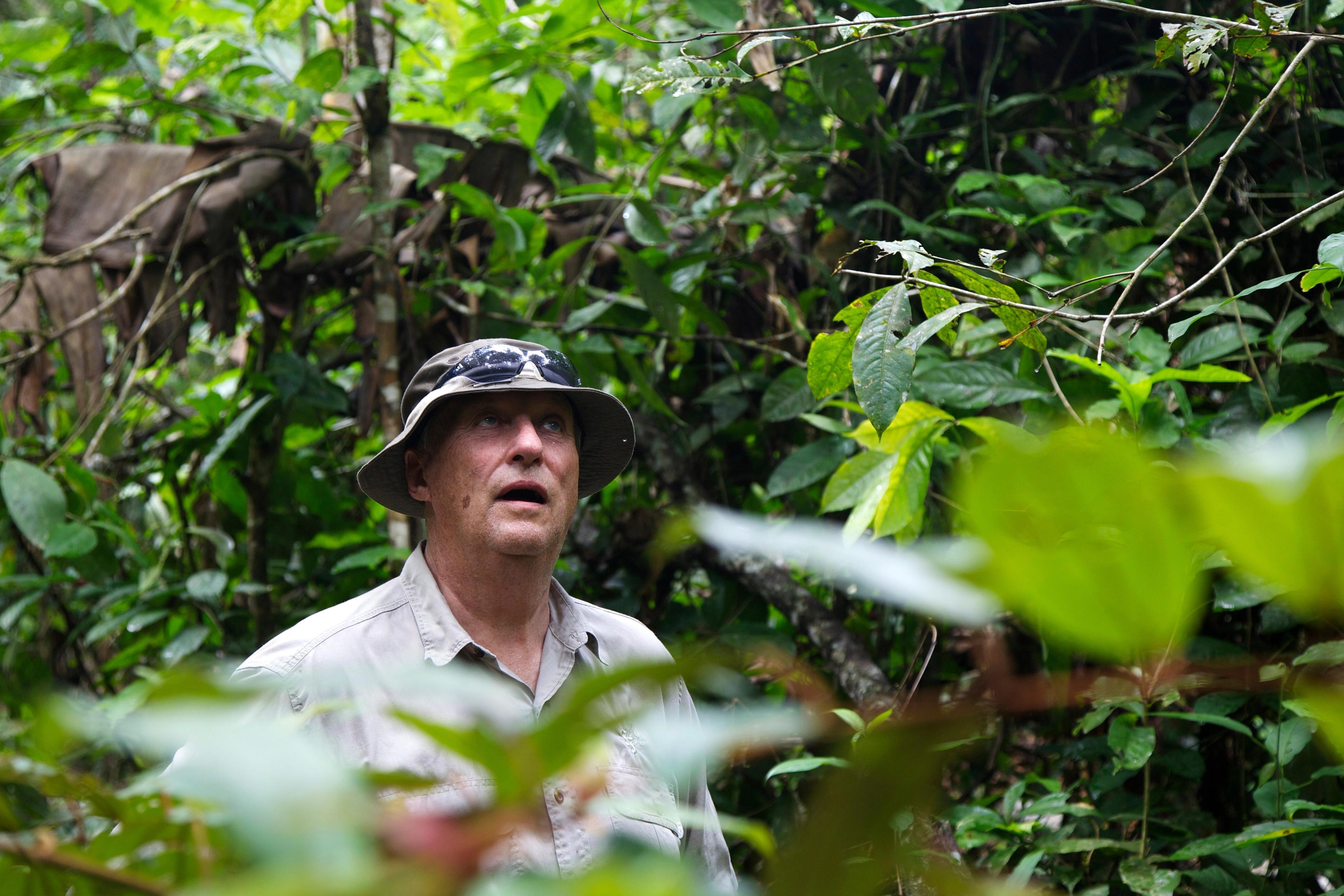
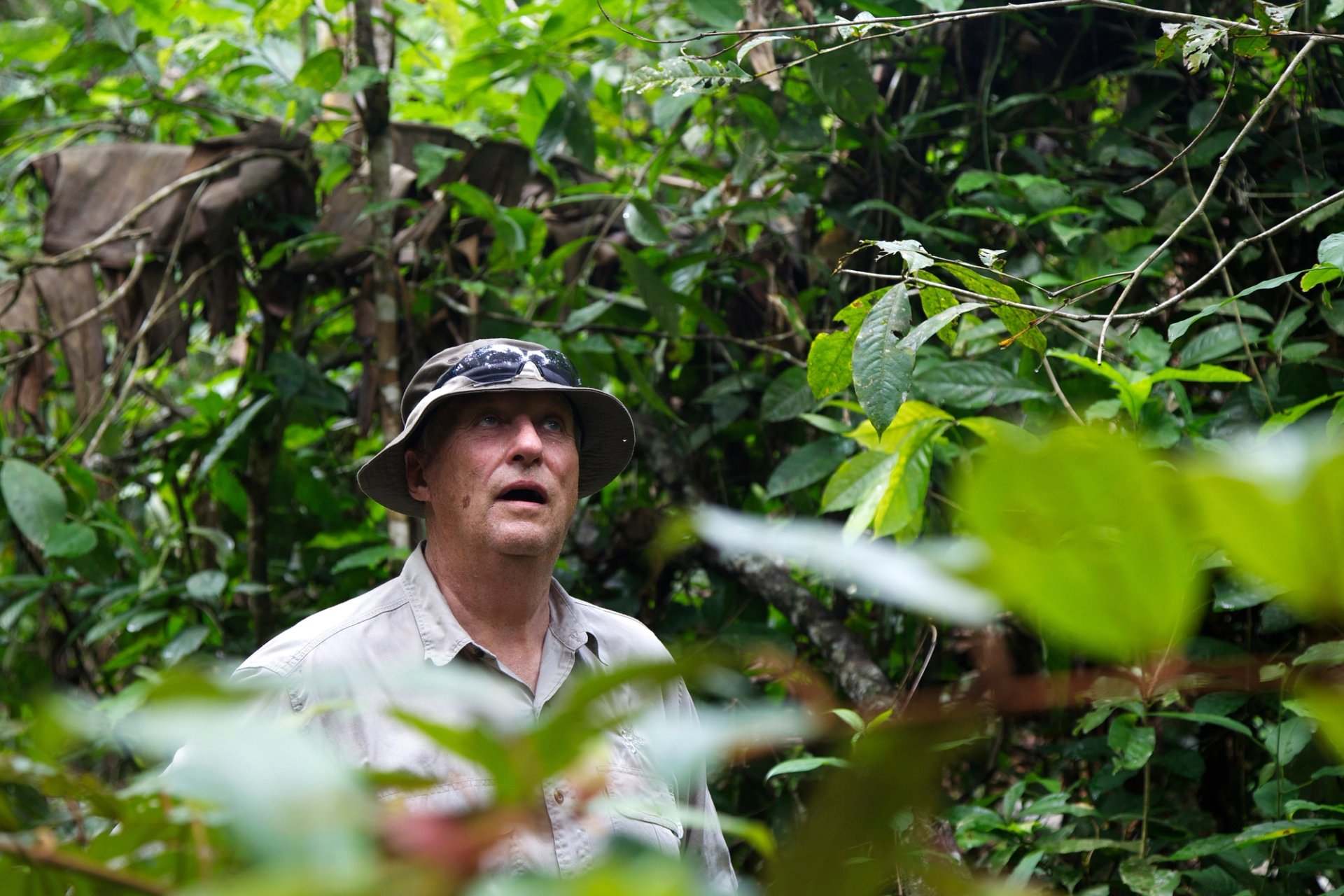
King Harald in the Amazon River basin. (Photo: Rainforest Foundation Norway / ISA Brazil)

The King visited Demini, the village of the Yanomami people in Brazil’s Amazon River basin, along the border of Venezuela. King Harald received a warm welcome from Daví Kopenawa, one of the tribe’s leaders and spokesman, and Lorival, one of the village’s oldest and most respected Yanomami shamans. The trip took place at the invitation of the Rainforest Foundation Norway.

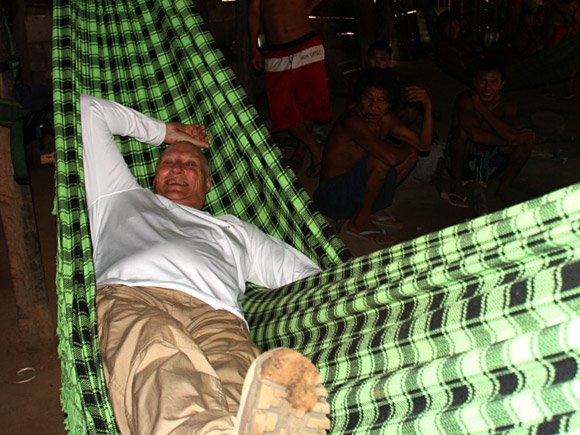
Slept in a hammock

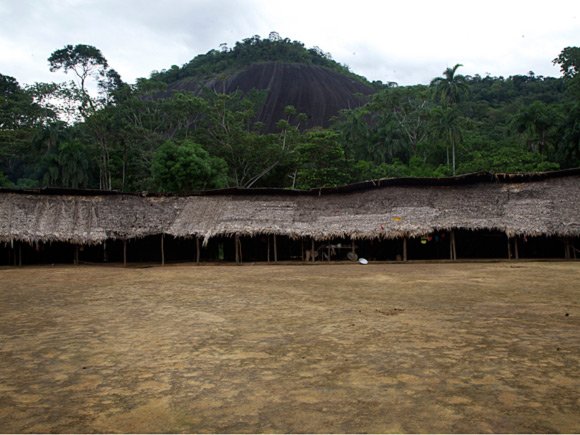
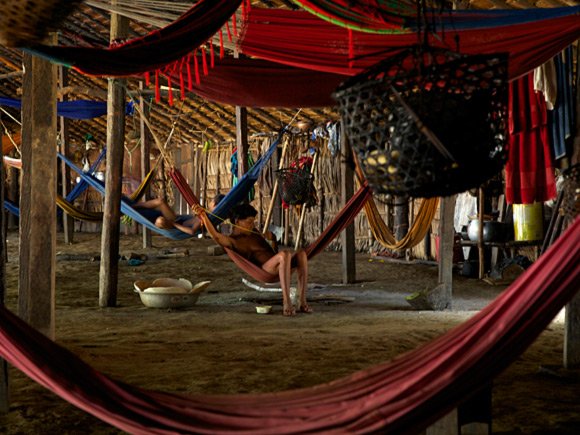
The village of Demini consists of a large, circular structure with an open courtyard in the middle. All 120 inhabitants live in this building and sleep in the hammocks hanging from the ceiling. Small fires keep the temperature warm at night. King Harald was given his own hammock to use during his stay.

From Monday, 22 April to Thursday, 25 April, King Harald lived with the Yanomami people and was afforded a unique glimpse into the tribe’s culture and way of life. The tribe survives by hunting, fishing, gathering edible plants in the forest, and cultivating its own gardens. King Harald ate their traditional diet and was served wild boar and wild turkey, as well as palm fruit and root vegetables from the communal gardens.

Joined the hunters in the rainforest

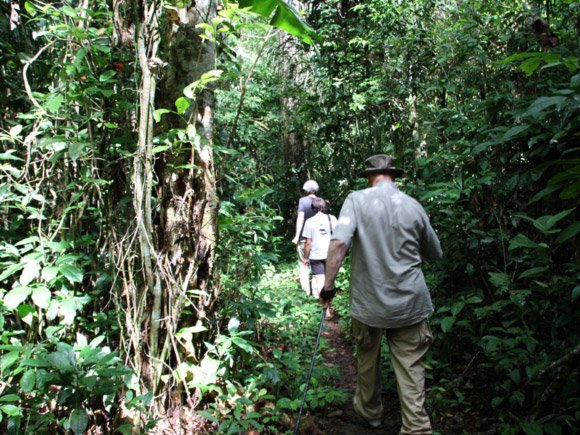
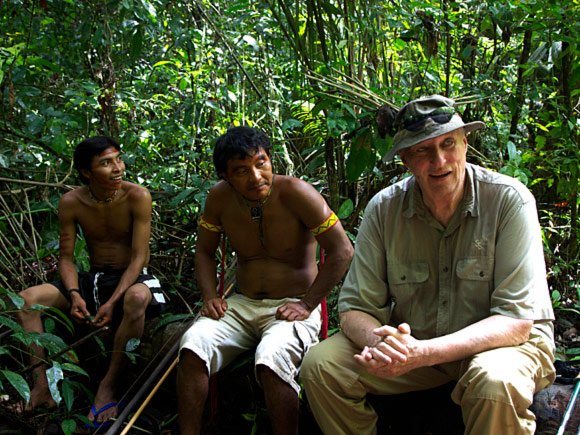
The King had the chance to accompany the village’s best hunters into the rainforest. The hunters demonstrated how they use the calls of the prey of the animals they are hunting.

It was fascinating to hear how they can imitate all of the animal calls found there as a way of luring in their prey; everything from jaguars and monkeys to parrots,” said King Harald.

The hunters use a bow and arrow with extremely accurate aim. Poison made from the bark of a tree is applied to the tip of the arrows.

The King also paid a visit to the communal gardens where the Yanomami raise root vegetables, bananas, fruit, herbs, tobacco and various plants that are used for everything from fish poison to perfume to herbal remedies.

A long-time dream

When the Norwegian division of the World Wildlife Fund was founded in 1970, the King – then Crown Prince Harald – served as its president. Since that time, a trip to the rainforest has been high on the King’s wish list:

This has been a dream of mine ever since my time with the World Wildlife Fund. So when the opportunity arose, I took it,” said King Harald.

An interpreter helped the King to speak with the villagers, and young and old alike crowded around him when he showed them photographs from his own family album. The King had brought an album containing photographs of the history of the Royal Family from the days of King Haakon to the present. The photographs and stories the King told were met with great enthusiasm, and he presented the album to the tribe as a gift.

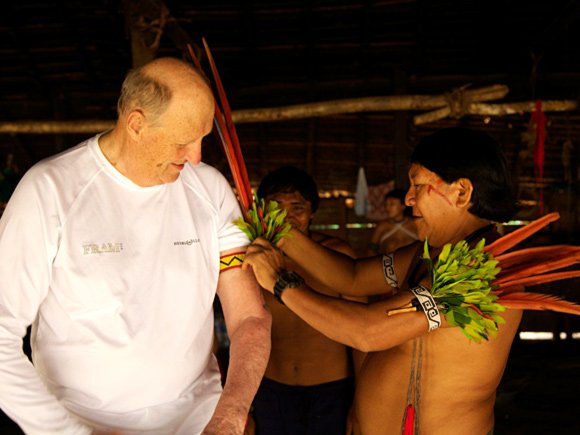
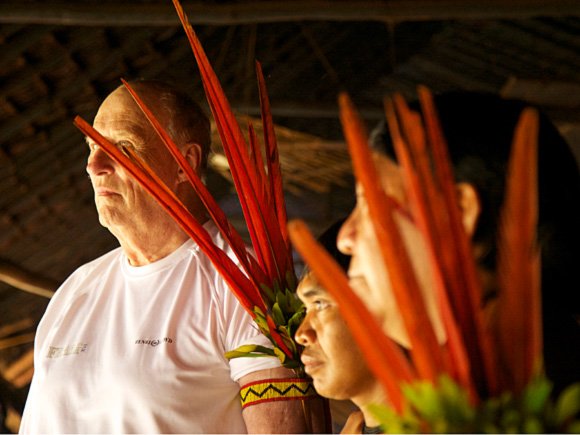
Prior to his departure, the King was draped with parrot feathers as a special mark of honour. The decorative feathers are tied around the upper arm and used by the male villagers on special occasions.

“This has been a fantastic trip. Absolutely fabulous,” says King Harald.

Dramatic history

The Yanomami are the largest and best known group of indigenous people in the Amazon, living in much the same way as their ancestors did. In the late 1980s their area was invaded by several thousand gold-diggers, and 15 per cent of the population died of disease and violence over a two-year period. The Yanomami territory was officially recognised by the Brazilian Government in 1992.

Dag Hareide, Director of the Rainforest Foundation Norway, accompanied the King on the journey.

His Majesty The King expressed great satisfaction over the results of the Norwegian support,” said Mr Hareide. “The Yanomami were also proud and pleased to be able to welcome the Norwegian King to their village. This is the first time that a head of state has visited the Yanomami territory.

King Harald tells of his visit to the Yanomamis, deep in the rainforests of Brazil (In Norwegian only) (Photo: Rainforest Foundation Norway / ISA Brazil - Editing: DKH)
King Harald in the Amazon River basin. (Photo: Rainforest Foundation Norway / ISA Brazil)
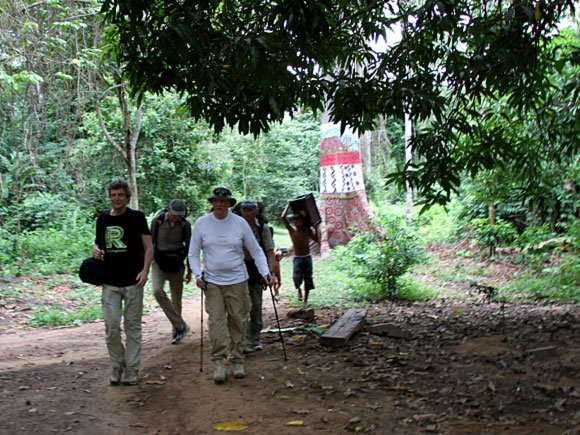
The traveling party has reached Demini following a 45-minute walk from the runway. (Photo: Rainforest Foundation Norway / ISA Brazil)
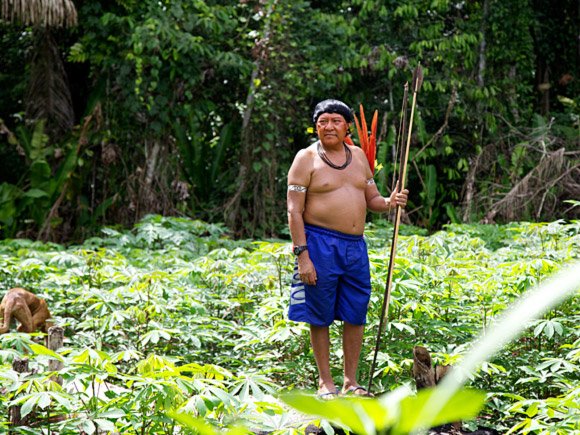
: Daví Kopenawa is the leader of the Yanomami and their international spokesperson (Photo: Rainforest Foundation Norway / ISA Brazil)
The village of Demini consists of one huge circular communal dwelling. Here, all of the village’s 120 inhabitants live under the same roof. (Photo: Rainforest Foundation Norway / ISA Brazil)
All 120 villagers live in this building, where everyone sleeps in hammocks (Photo: Rainforest Foundation Norway / ISA Brazil)
The King slept in a hammock for the first time in his life. (Photo: Rainforest Foundation Norway / ISA Brazil)
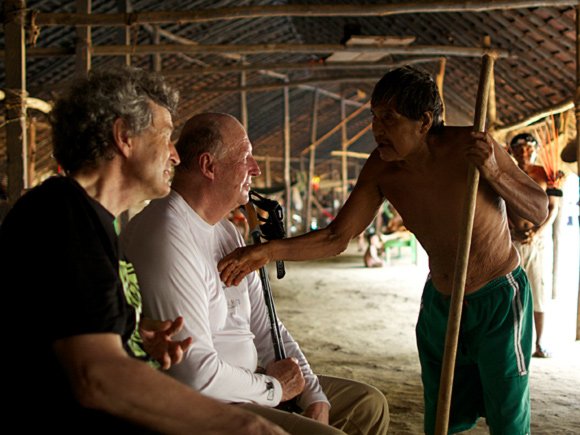
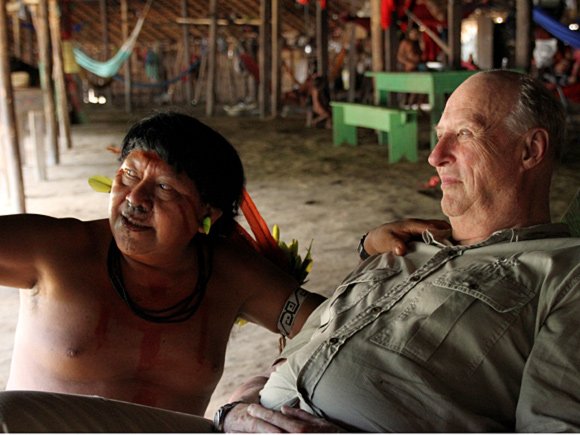
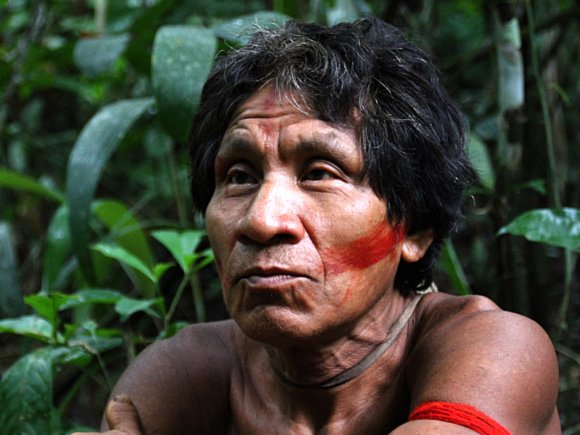
King Harald and Dag Hareide listen to Lorival, the village’s oldest shaman (Photo: Rainforest Foundation Norway / ISA Brazil)
King Harald in conversation with the village chief, Daví Kopenawa. With the help of an interpreter, the two shared experiences and stories about their own cultures (Photo: Rainforest Foundation Norway / ISA Brazil)
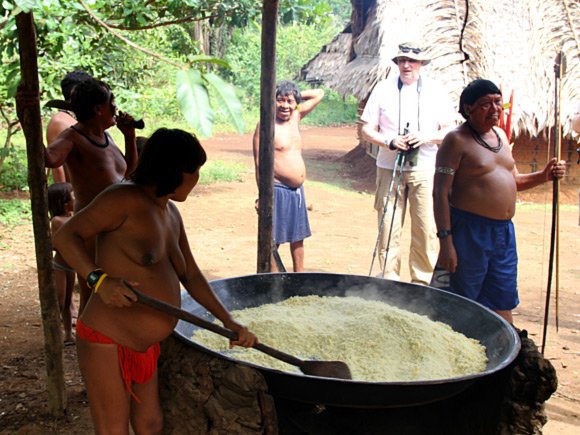
The menu consisted of local food. Here, the King is given a demonstration of how the Indians make flour from the root vegetable manioc. (Photo: Rainforest Foundation Norway / ISA Brazil)
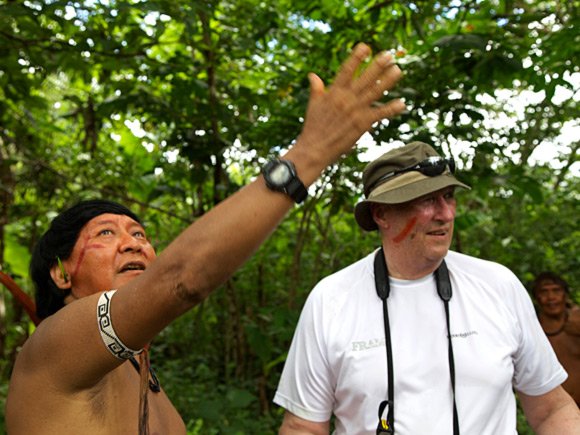
The leader of the Yanomami, Daví Kopenawa, showed the King how the Indians hunt and obtain food from the forest (Foto: Rainforest Foundation Norway / ISA Brazil)
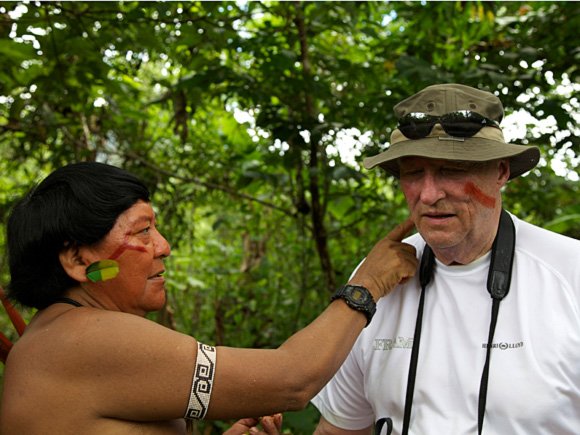
The King is painted in the face by Daví Kopenawa. By painting the King, Daví shows that King Harald is «one of them» (Photo: Rainforest Foundation Norway / ISA Brazil)
En route through the rainforest. (Photo: Rainforest Foundation Norway / ISA Brazil)
With their great knowledge of life in the rainforest, the Yanomami Indians are supreme hunters. (Govva: Rainforest Foundation Norway / ISA Brazil)
Gili buoremus bivdit čájehit movt sii áđestallet elliid jienaid ja nu giktet daid iežaset guvlui. (Govva: Rainforest Foundation Norway / ISA Brazil)
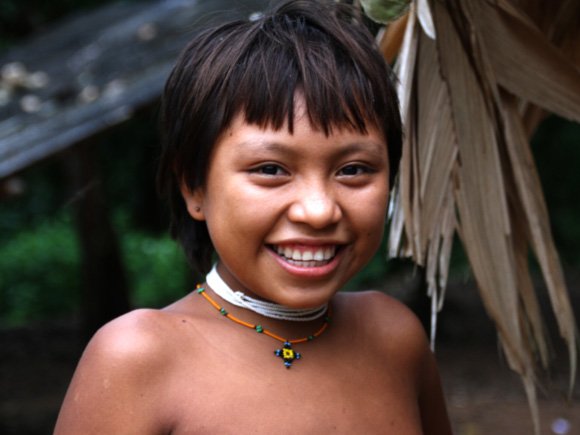
A young Yanomami girl from the village of Demini (Photo: Rainforest Foundation Norway / ISA Brazil)
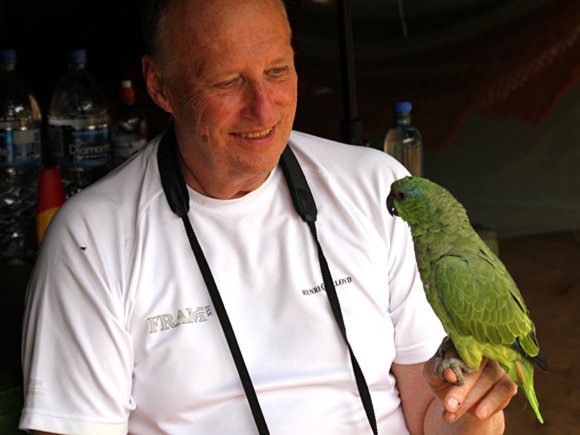
Domesticated parrots were part of village life. (Photo: Rainforest Foundation Norway / ISA Brazil)
Daví Kopenawa attaches macaw feathers to King Harald’s arm just prior to departure. This is held to be a special badge of honour. (Photo: Rainforest Foundation Norway / ISA Brazil)
Macaw feathers are worn by the men of the village on special occasions (Photo: Rainforest Foundation Norway / ISA Brazil)
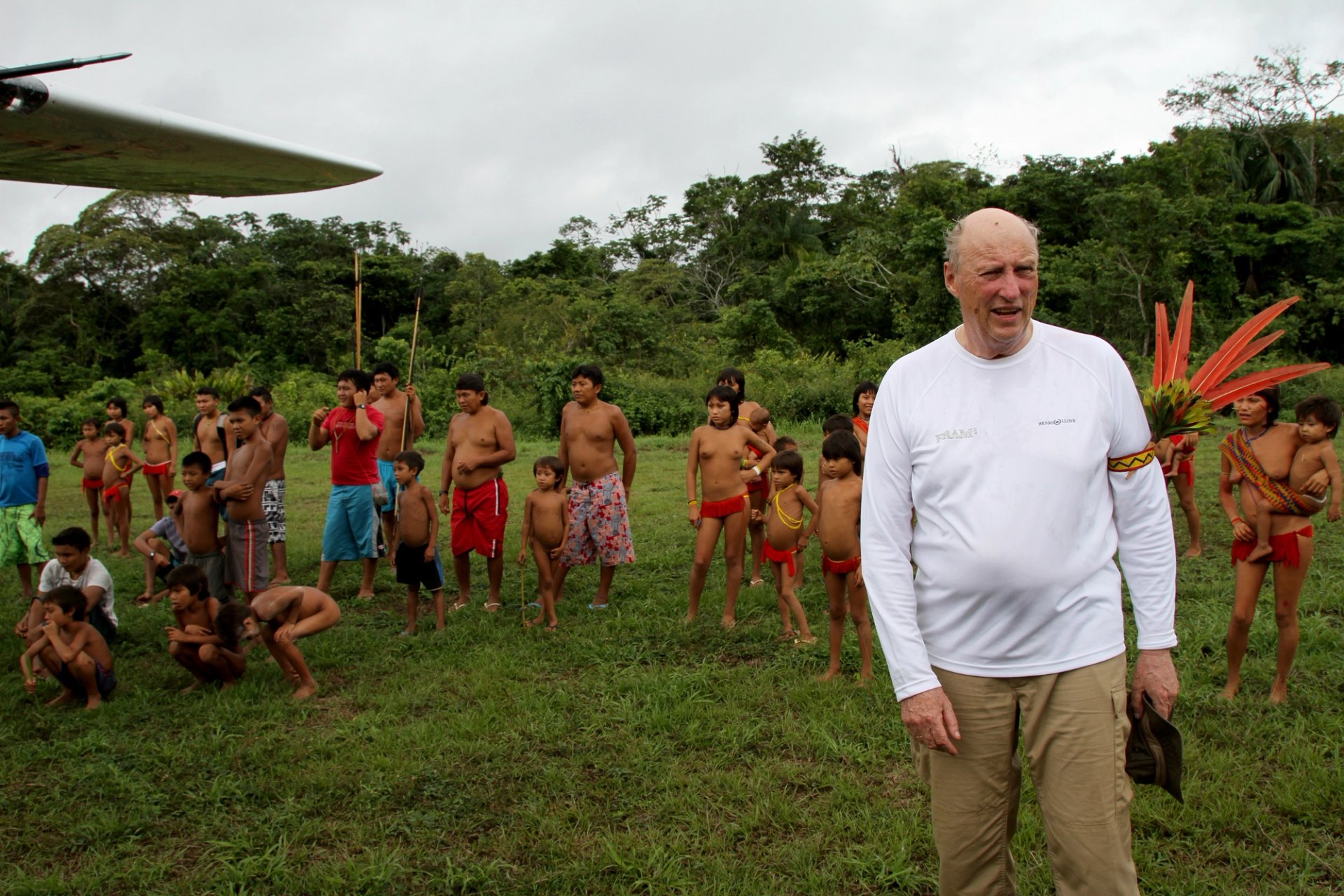
Villagers of all ages follow King Harald to the plane which will bring him back to Boa Vista (Photo: Rainforest Foundation Norway / ISA Brazil)

In the Amazon rainforest
April 2013 King Harald fulfilled a long-held dream when he spent four days living with the Yanomami people in a remote part of the Amazon River basin. (Photo: Rainforest Foundation Norway / ISA Brazil)
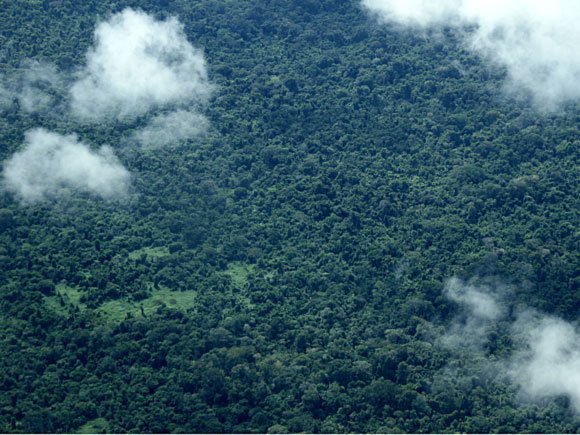
It takes upwards of an hour to fly from Boa Vista to the Yanomami village of Demini. The northern Brazilian rainforest extends beneath the airplane. (Photo: Rainforest Foundation Norway / ISA Brazil)
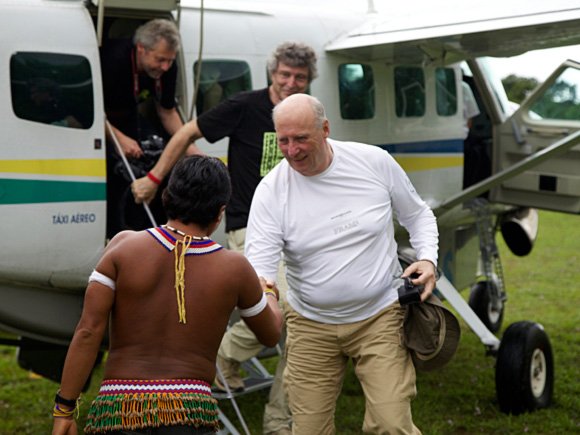
The King is greeted by a representative from the Yanomami Indians on the grassy runway. (Photo: Rainforest Foundation Norway / ISA Brazil)
The traveling party has reached Demini after a 45-minute walk from the runway. (Photo: Rainforest Foundation Norway / ISA Brazil)
The King's host, Daví Kopenawa, is the leader of the Yanomami and their international spokesperson. (Photo: Rainforest Foundation Norway / ISA Brazil)
The village consists of one huge circular communal dwelling, where all of the village’s 120 inhabitants live under the same roof. (Photo: Rainforest Foundation Norway / ISA Brazil)
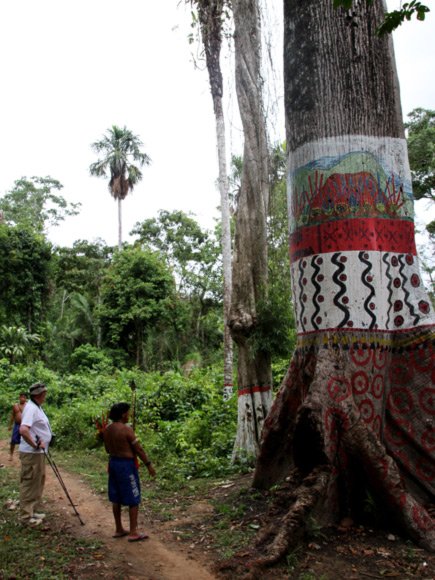
An enormous tree marks the gateway into the village of Demini. The tree was decorated in conjunction with the 20-year anniversary of their their own territory. (Photo: Rainforest Foundation Norway / ISA Brazil)
In the circular communal dwelling of the Yanomami, all of the 120 village inhabitants sleep in hammocks under the same roof. (Photo: Rainforest Foundation Norway / ISA Brazil)

Showing 8 of 35