Skip to content

King of Norway

His Majesty King Harald V acceded to the throne on 17 January 1991 upon the death of King Olav V. Like his father and grandfather before him, King Harald adopted the motto “We give our all for Norway”.

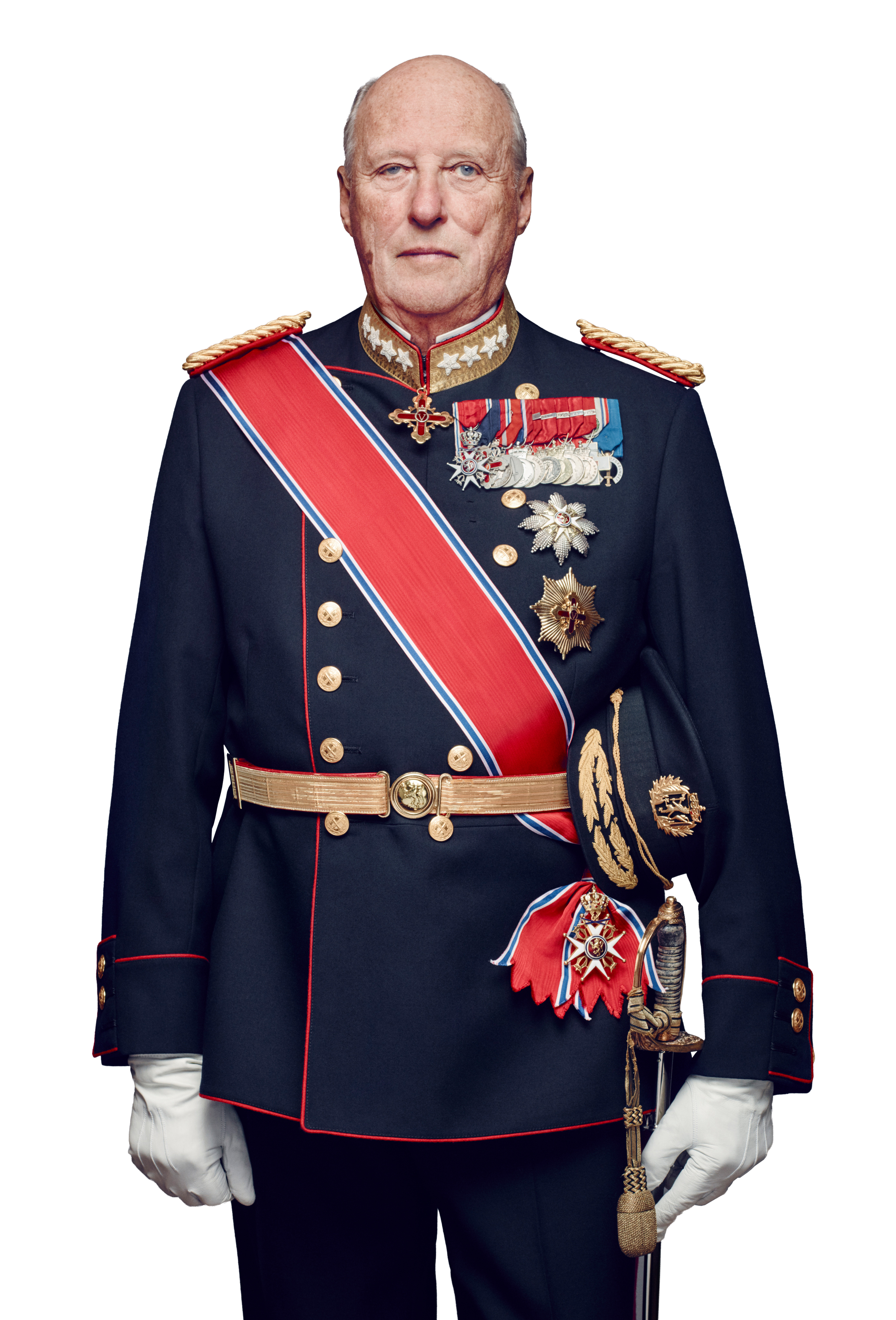
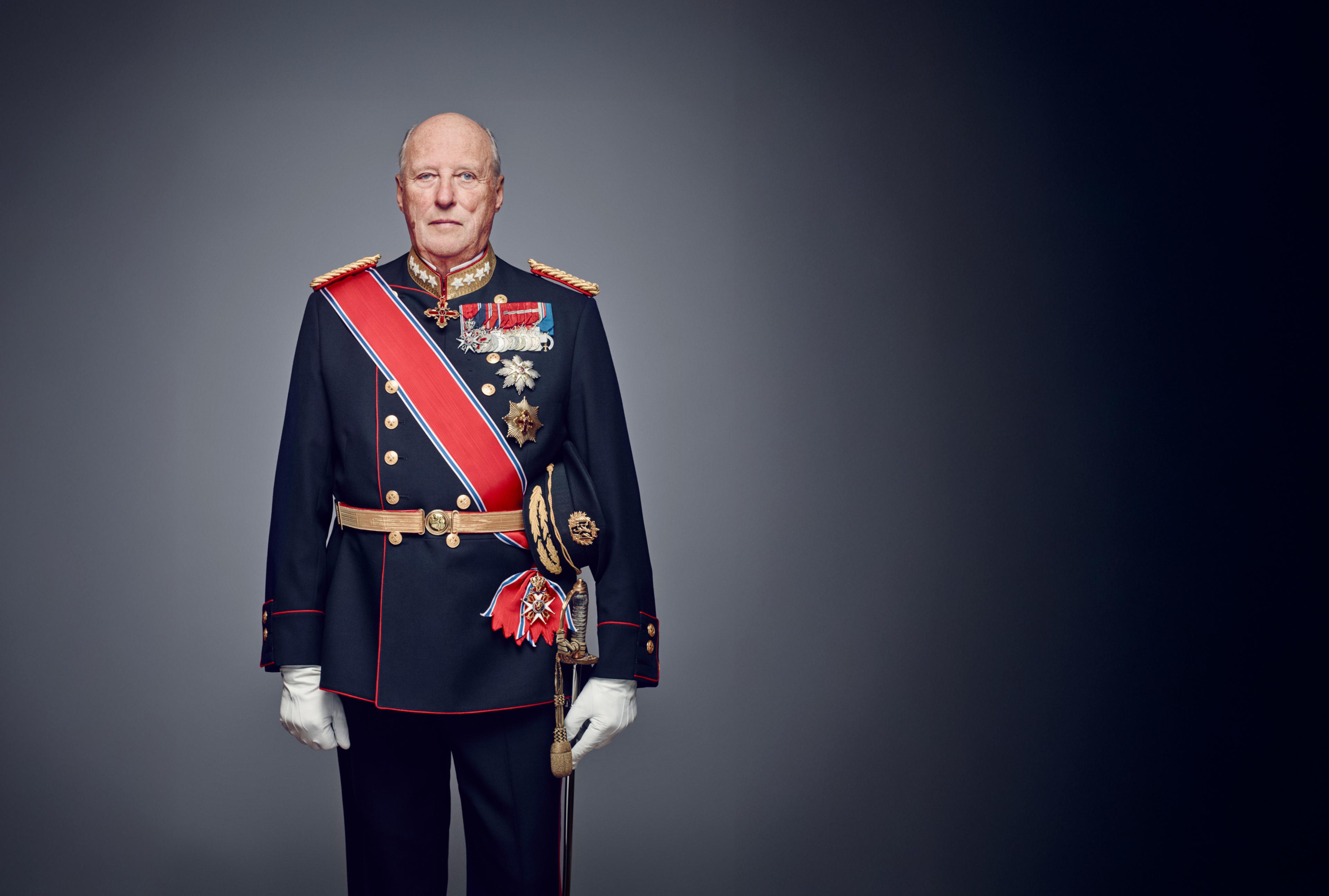
His Majesty King Harald. Photo: Kimm Saatvedt, The Royal Court

King Harald swore an oath to uphold the Constitution in a formal ceremony in the Storting on 21 January 1991, and the new King and Queen of Norway were consecrated in Nidaros Cathedral in Trondheim on 23 June 1991. The King’s duties are mainly representative and ceremonial.

The King is the foremost symbol of the Norwegian community. The King and his family on the Palace Balcony on 17 May stand at the centre of our national day celebrations.

King Harald meets people from all over the country, in all circumstances. He is there for the great celebrations – and in times of profound sorrow. When major tragedies occur, the King visits the affected areas and meets those who have been impacted. After the terrorist attacks on 22 July 2011, King Harald expressed the collective grief and despair of the entire nation.

King Harald represents Norway abroad and has undertaken numerous state visits and other official visits.

Watching the King’s New Year’s speech is a tradition for many. Photo: Heiko Junge / NTB

Official duties as King

The King’s duties are stated in the Constitution of Norway. The King plays an important role in connection with changes of government and presides over the Council of State at the Royal Palace. The King undertakes the formal opening of the Storting (the Norwegian parliament) every autumn. Newly appointed ambassadors to Norway from other countries must present their credentials to the King during a formal audience at the Royal Palace.

His Majesty The King is the highest ranking officer in Norway.

In addition to granting audiences, the King’s day-to-day duties also include meetings with the Prime Minister, the Foreign Minister and representatives of the Defence Establishment. The King also travels to different parts of Norway, where he visits public and private institutions.

Change of government

The King plays an important role in the formal transition from one government to the next. The formal procedure for a change of government is that the prime minister in power informs the King that the government will step down and tenders the King his or her resignation. The King then consults the Prime Minister about who should form the new government. They will normally recommend a person from the party or coalition with the greatest support in the Storting. The constitutional practice is that the King follows this advice.

It is formally the King who asks the selected candidate to form a government.

The first government appointed by King Harald was Thorbjørn Jagland’s government on 25 October 1996. However, he also appointed Gro Harlem Brundtland’s third government on 3 November 1990 – at that time in his capacity as Crown Prince Regent.

King Harald has taken his place on the podium. Photo: Peter Mydske, Stortinget
The King and The Crown Prince with the government in the Council Chamber, December 2023. Minister of Foreign Affairs Espen Barth Eide and Ministers Emilie Enger Mehl, Erling Sande, Karianne Oldernes Tung, and Tonje Brenna were absent when the photograph was taken due to negotiations in the Storting. Photo: Heiko Junge / NTB
The new Government exits to the Palace Square to meet people and media. Photo: Liv Osmundsen, The Royal Court
King Harald grants the new ambassador of the Republic of Korea, Minjeong Seo, audience. Photo: Ole Berg-Rusten / NTB

The Council of State

King Harald presides over the Council of State at the Palace on Fridays. Decisions made by the Government as a single body are made in the Council of State. All acts of legislation and other decisions in the Council of State must be sanctioned by the King and countersigned by the Prime Minister before they can take effect. When the Constitution states that executive power rests with the King, this today means “the King in the Council of State” – neither the King nor the government alone.

King Harald first attended the Council of State when he became Crown Prince in 1957, and he has presided over it since 1991. There are normally around 40 Councils of State each year.

Opening of the Storting

His Majesty The King presides over the formal opening of the Storting each autumn. It is among the most formal and solemn ceremonies in Norway, and normally the King’s only visit to the Storting each year.

When King Harald opened the 170th Storting on 11 October 2025, he delivered the Speech from the Throne for the 34th time. By then, the King had attended the opening of the Storting 60 times – first as Crown Prince, and later as King.

Formal audiences

All newly-appointed ambassadors to Norway from another country are received by King Harald in a formal audience. Once the ambassador has presented his or her credentials (in the form of Letters of Credence), they may begin to carry out their duties as ambassador to Norway.

King Harald receives Botswana’s new ambassador, Juliana Angela Dube-Gobotswang, in a formal audience. Photo: Heiko Junge / NTB

From all corners of the world

King Harald grants ambassadors from around the world audience at his office – normally between 25 and 35 each year.

In 2024 King Harald received Letters of Credence from 24 ambassadors. They represented Mongolia, Kenya, Jamaica, Burundi, Russia, Botswana, Albania, Suriname, Ghana, the Netherlands, Brazil, Estonia, Spain, South Korea, Saudi Arabia, Mauritania, Thailand, Costa Rica, Sweden, Argentina, Zambia, Oman, Qatar and Egypt.

In addition, the Crown Prince Regent received three ambassadors representing Armenia, Japan and Mexico.

The King and the Armed Forces

The King is the highest ranking officer in Norway. Military authority is exercised by the King in Council of State, which means it is the Norwegian Government that has the ultimate military responsibility in times of war and peace.

King Harald holds the rank of General in the Army and Air Force, and of Admiral in the Navy. He grants the military chiefs of staff audiences to keep himself informed of the situation, and he is present at important ceremonies and commemorations organised by the Armed Forces.

King Harald is a graduate of the Military Academy, in a tradition that extends back to King Olav V and King Haakon VII – and forward to His Royal Highness Crown Prince Haakon and Her Royal Highness Princess Ingrid Alexandra.

King Harald visits Cold Response 2016. Here he greets U.S. Army soldiers who trained together with BrigN during the military exercise. Photo: Torbjørn Kjosvold / Forsvaret / NTB

Travelling in Norway

In addition to his constitutional duties, King Harald undertakes a wide range of responsibilities as the King of Norway. The King receives many invitations to events and commemorative activities all over the country, and tries, as far as his programme will allow, to be present.

Every year the King and Queen usually pay a visit to a county in Norway. Their stay lasts a few days, during which time they pay visits to several municipalities. This is among the King and Queen's most cherished duties.

He hosts events at the Palace together with the Queen to honour the contributions of volunteers, longstanding community champions, athletes, and others who have, in various ways, made a special contribution to Norwegian society.

In recent years the King has also become involved in issues related to welfare and conditions for children. He regularly receives letters from children whose everyday lives are difficult, and has on occasion received children and groups of children for talks at the Palace.

County visits across Norway

From Randaberg in Rogaland, 2024. Photo: Lise Åserud / NTB
King Harald and Queen Sonja in Vevelstad, Nordland, 2023. Photo: Annika Byrde / NTB
The King and Queen in Hordaland. Photo: Marit Hommelstad / NTB
The King and Queen arrives in Vanylven, Møre og Romsdal county, 2022. Photo: Erik Birkeland/TINGH
Queen Sonja received a warm hug in Odda, 2019. Photo: Tom Hansen, Hansenfoto.no

Representing Norway abroad

King Harald has carried out numerous visits abroad on behalf of Norway. Even as Crown Prince, he placed great emphasis on supporting Norwegian industry by travelling with trade delegations abroad. This commitment is particularly evident during state visits, where Norwegian business, research, and culture take centre stage on the agenda. State visits is being planned in close coordination with the Ministry of Foreign Affairs.

In 2020 King Harald and Queen Sonja made their 50th state visit, when they visited Jordan. They have hosted an even greater number of state visits to Norway.

State visit from Norway

The visit to Jordan in 2020 was their 50th state visit all together. Photo: Heiko Junge / NTB
Culture – including historical sites such as Petra – business, research, and education are on the agenda during state visits. Photo: Tom Hansen, Hansenfoto.no
State visit to China: The King and Queen laid a wreath at the Monument to the People's Heroes. Photo: Heiko Junge / NTB
King Harald and Queen Sonja threw flowers into the Rio de la Plata in Argentina in remembrance of those who lost their lives. Photo Heiko Junge / NTB
The Royal Yacht Norge can be used for state visits and other official duties when distance and geography make it appropriate. Here, on an official visit to Denmark, the Danish Royal Yacht Dannebrog escorted Norge into Aarhus. Photo: Mikkel Berg Pedersen / Scanpix

Congratulations and condolences

As Head of state, it is His Majesty the King's task to be the sender of congratulations and condolences to other countries on behalf of Norway. In collaboration with the Ministry of Foreign Affairs and Norwegian embassies, congratulations are sent to newly elected Heads of state on their inauguration and condolences on the death of former heads of state. Similarly, the King offers condolences on behalf of Norway when major accidents and disasters strike. Congratulations and condolences are primarily sent to countries with which Norway has diplomatic relations.

Norwegian orders and medals

The King’s duties are defined by the Constitution. The Constitution also mentions the King’s right to bestow orders.

Each year many individuals are recognised by His Majesty The King for their service to Norway and Norwegian society. All recipients of the Order of St. Olav are granted an audience with the King, while all recipients of the King’s Medal of Merit are invited to a reception at the Palace hosted by the King and Queen.

Reception at the Royal Palace. Photo: Håkon Mosvold Larsen / NTB