Referendum for a king
The dissolution of the union between Norway and Sweden in 1905 led to a discussion about the form of government Norway was to have. The question was put to a referendum. A majority of the people voted to have a monarchy, with Danish Prince Carl as Norway's new king.
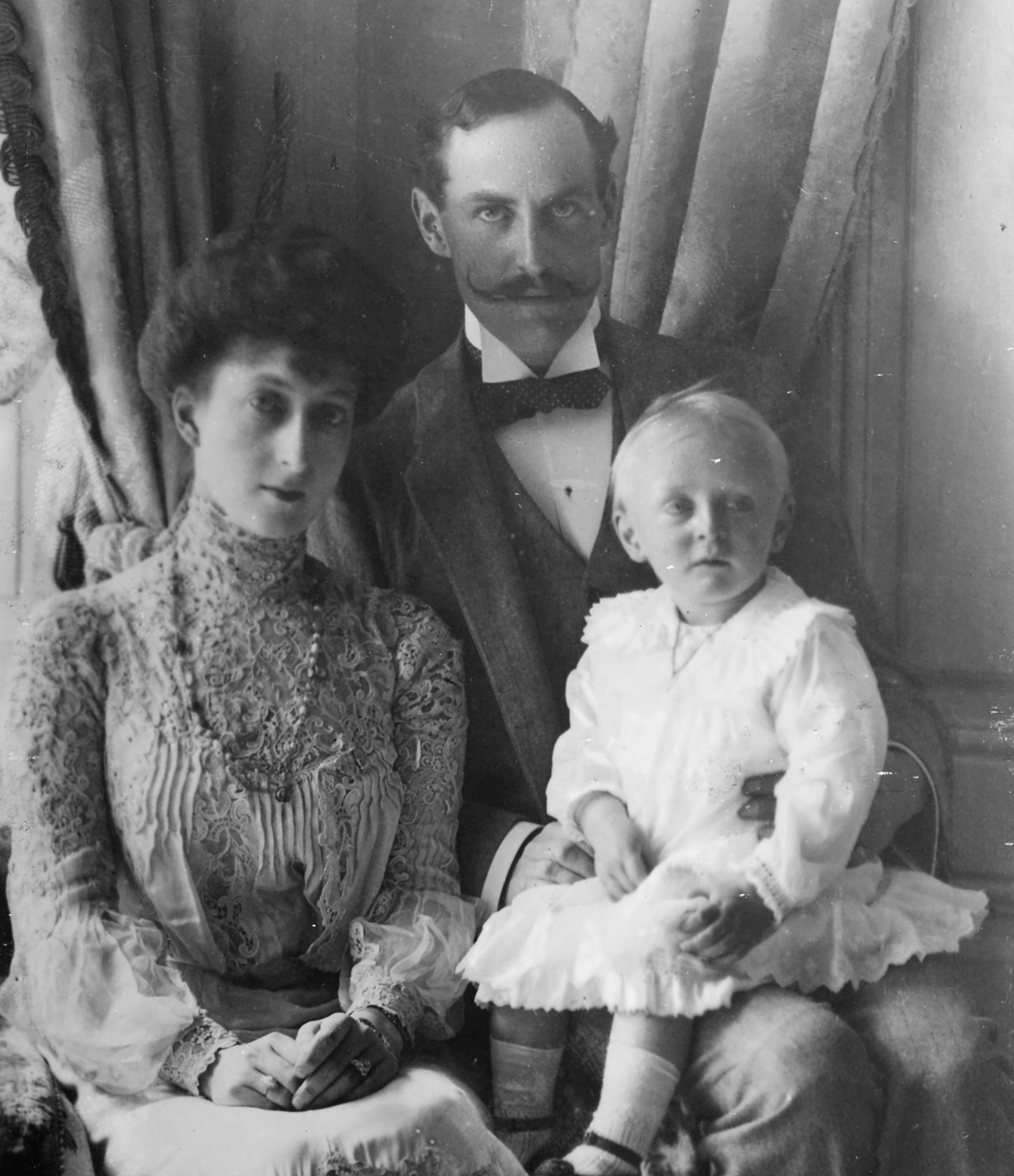
Norway had been in a union with Sweden since 1814, but relations within the union became more and more strained during the last half of the 1800s due to the emerging dissatisfaction with what was increasingly seen as Norway's inferior status. In the spring of 1905 the dispute reached new heights and the Norwegian Storting approved a unilateral resolution to withdraw from the union on 7 June 1905.
Sweden was unwilling to recognise the 7 June resolution as lawful, and it was feared there would be war. But the situation was resolved through negotiations, not least with the help of Swedish Crown Prince Gustaf. The union was dissolved peacefully, without any armed conflict. On 26 October, King Oscar II, the last King of Sweden and Norway, recognised Norway as an independent state, and renounced his claim to the Norwegian throne the following day.
Who should be the new king?
The union with Sweden had been a union between the separate kingdoms of Sweden and Norway under a common monarch. Now the Swedish king no longer reigned in Norway. If Norway was to remain a monarchy, who should take over the throne?
First, the Storting asked King Oscar II for permission to institute a prince from the House of Bernadotte as King of Norway. This was meant as a conciliatory gesture to ease the tensions between Norway and Sweden. But King Oscar declined the offer.

Who should be the new king?
A Danish prince
Even before King Oscar II turned down the offer to allow a Bernadotte prince to accede to the Norwegian throne, there was another prince being discussed as a potential candidate: Prince Carl of Denmark.
In a foreign policy context, there were various advantages weighing heavily in favour of the young Prince. He was married to Princess Maud, the daughter of King Edward VII and Queen Alexandra of the United Kingdom. Great Britain's support was of great importance to Norway in the time around the dissolution of the union.
Another argument was that the Prince and Princess had a son, two-year-old Alexander. Which meant that an heir to the throne was already in place.
A king chosen by the people
During the autumn of 1905 there was an growing debate about whether Norway should remain a monarchy or become a republic. News of this debate reached Copenhagen. Prince Carl stated that he was willing to accede to the Norwegian throne, but only if he truly had the support of the population. A decision was therefore taken to hold a referendum.
The referendum was held on 12–13 November. All those entitled to vote, i.e. men aged 25 and older, were asked to answer yes or no to whether they agreed that the Storting could authorise the Government to ask Prince Carl of Denmark to allow himself to be elected as king.
Republicans supported monarchy
A number of well-known republicans, such as Prime Minister Christian Michelsen, author Bjørnstjerne Bjørnson and humanitarian and explorer Fridtjof Nansen also supported the idea of a monarchy in the ongoing debate. This was due both to a desire to appease the European powers, which viewed Norwegian policies in connection with the dissolution of the union with some concern, and to the close ties that Prince Carl had to the Royal Houses in Denmark and Great Britain. Moreover, the idea of a monarchy was popular among the people, and it was considered likely that maintaining a monarchy would minimise resistance and domestic instability. The Government threatened to resign if Prince Carl was not approved.

Overwhelming majority
The referendum resulted in a clear majority for Prince Carl and a monarchy. There were 259 563 votes in favour of a monarchy versus 69 264 votes in favour of a republic.
After a vote in a meeting of the Storting on 18 November, the President of the Storting, Carl Berner, sent a telegram formally offering Prince Carl the Norwegian throne.
Formalising the selection of the King
On 20 November, Carl Berner travelled to Copenhagen as head of an official delegation, where the selection of Prince Carl as King of Norway was formalised in an audience at Amalienborg Castle. The President of the Storting conveyed the greetings and good wishes of the people of Norwegian people.

Norway's new royal family
In the early morning of 25 November, Norway's new royal family sailed into the Oslo Fjord on board the Danish Royal Yacht Dannebrog, through thick fog and heavy snow. At Oscarsborg Fortress they boarded the Norwegian naval vessel Heimdal and continued on to the Norwegian capital.
King Haakon VII stepped ashore in Kristiania (now Oslo) with two-year-old Crown Prince Olav in his arms. Prime Minister Christian Michelsen welcomed the Norway's new king.
– It has been nearly 600 years since the Norwegian people have had a king of their own. Not in all this time has he been solely our own. We have always had to share him with others. Never has he made his home among us. And where the home lies also lies the heart of the nation. Today, that all changes. Today, Norway’s young king has come to build his home in the capital of our country. Chosen by a free people as a free man to lead this country, he is to be our very own. Once again, the king of the Norwegian people will emerge as a powerful, unifying symbol of the new, independent Norway and all that it shall undertake.
Prime Minister Christian Michelsen welcoming King Haakon VII on his arrival to Norway
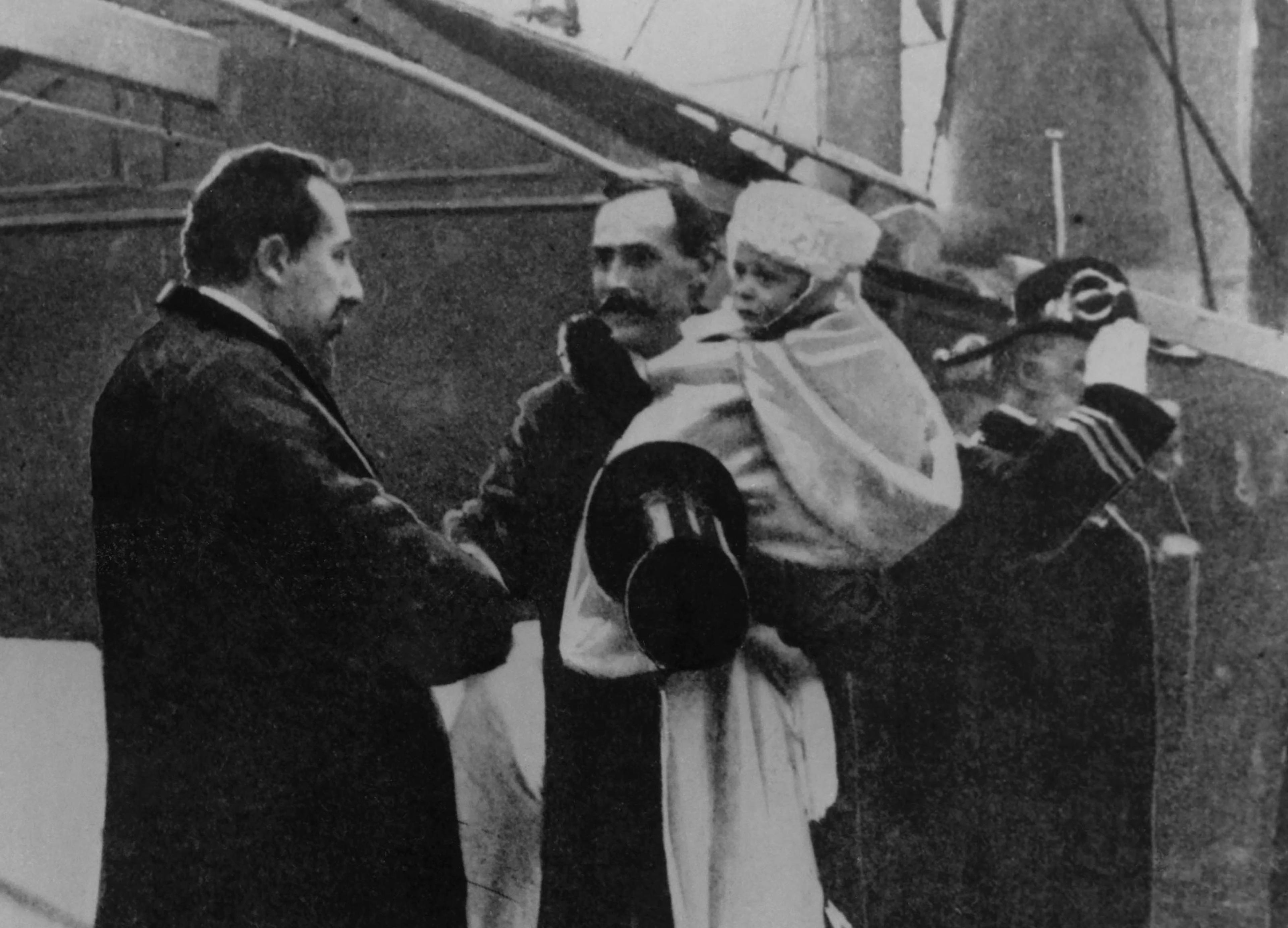
King Haakon VII, Queen Maud and Crown Prince Olav in Oslo were met by a cannon solute from Akershus Fortress when they arrived in Kristiania. Throughout the city church bells were sounded to celebrate Norway’s new royal family.
On 27 November 1905 King Haakon swore an oath of allegiance to the constitution in the Storting. On 22 June 1906 the King and Queen were crowned and anointed in Nidaros Cathedral. The coronation and reestablishment of the national monarchy came to symbolise a Norway that was free and independent.