Royal wedding 1896
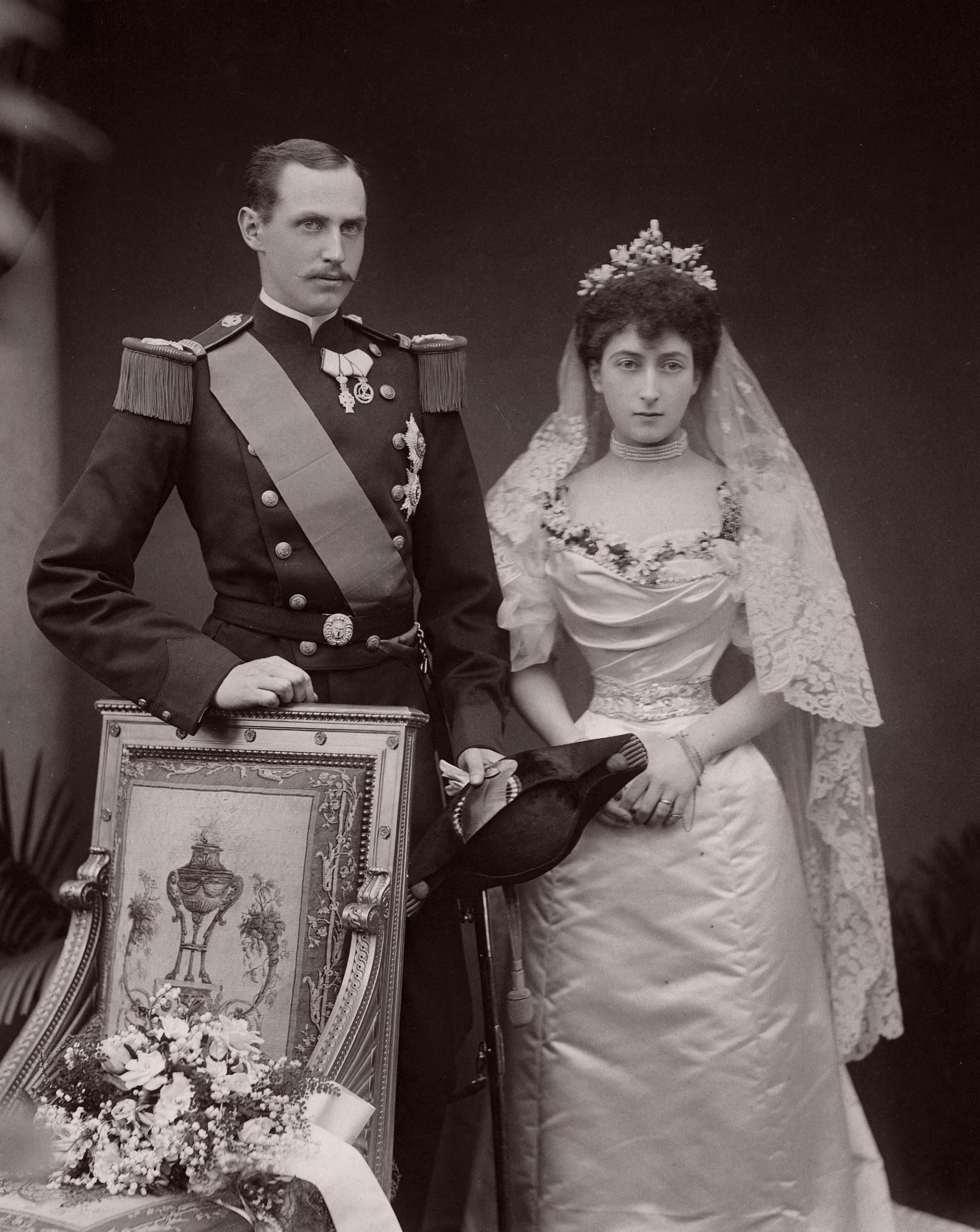
On 22 July 1896, Prince Carl of Denmark and Princess Maud of Great Britain were married in the chapel at Buckingham Palace. Ten years later, they were crowned King Haakon and Queen Maud of Norway.

Prince Carl and Princess Maud knew each other well. They were cousins, and as children they had spent many summers together in Denmark. But such a marriage was not merely a private matter; it was also a dynastic and political alliance. Both their parents and the heads of state in Denmark and England had to give their consent. Princess Maud in particular was considered a highly desirable match. Her father, the Prince of Wales, had to approve the marriage, and he in turn had to obtain the permission of his mother, Queen Victoria.
Princess Maud herself wrote to her grandmother, asking her to give her approval. The approval came by telegram from Balmoral Castle, and on 28 October 1895 their engagement was announced. Queen Victoria appears to have liked the Danish prince. In March, she is said to have written in her diary: “Maud’s fiancé, Carl of Denmark, came to lunch. He seemed to be a pleasant man, very tall and good-looking.”

Queen Maud's wedding dress
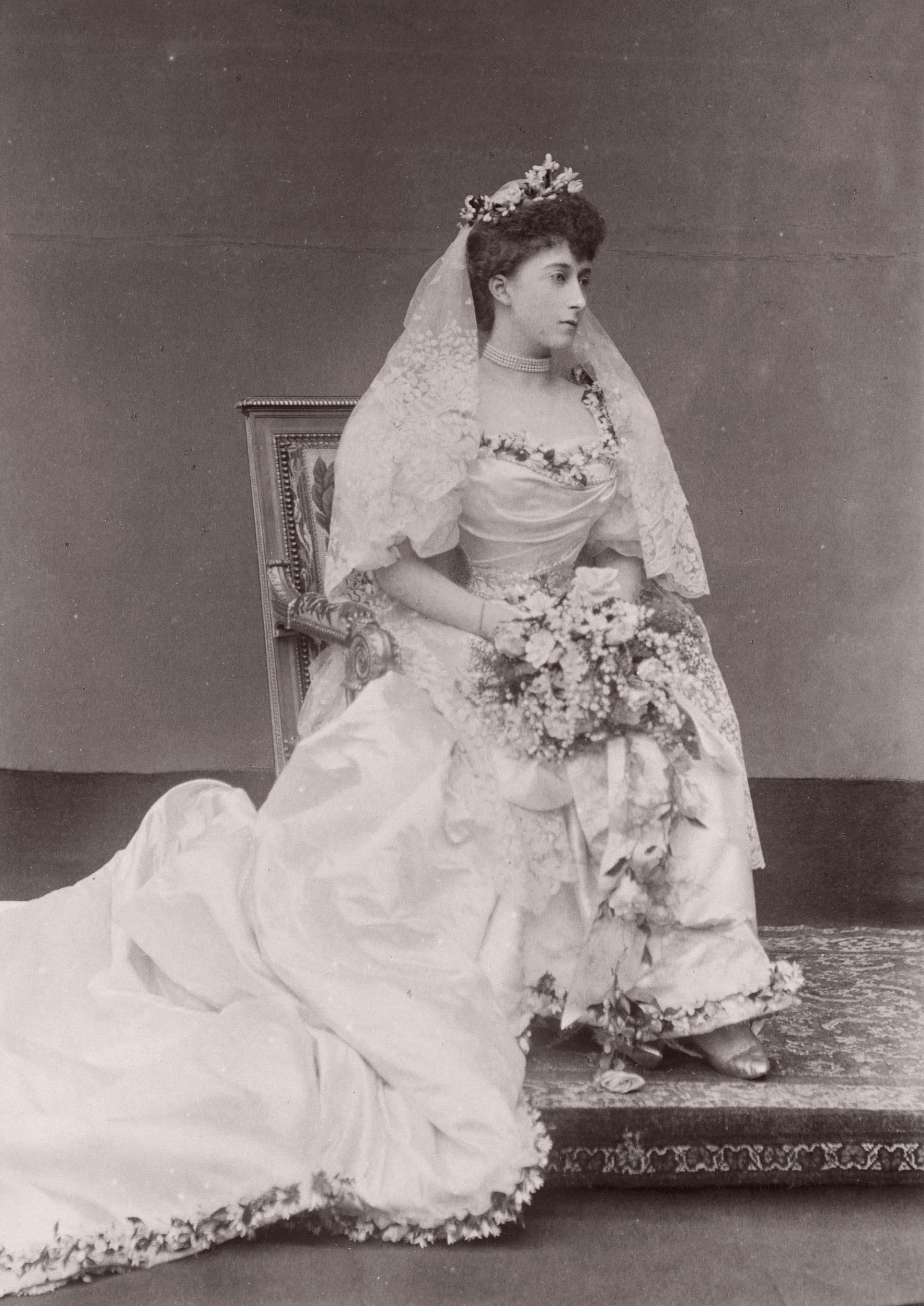
The Wedding Dress
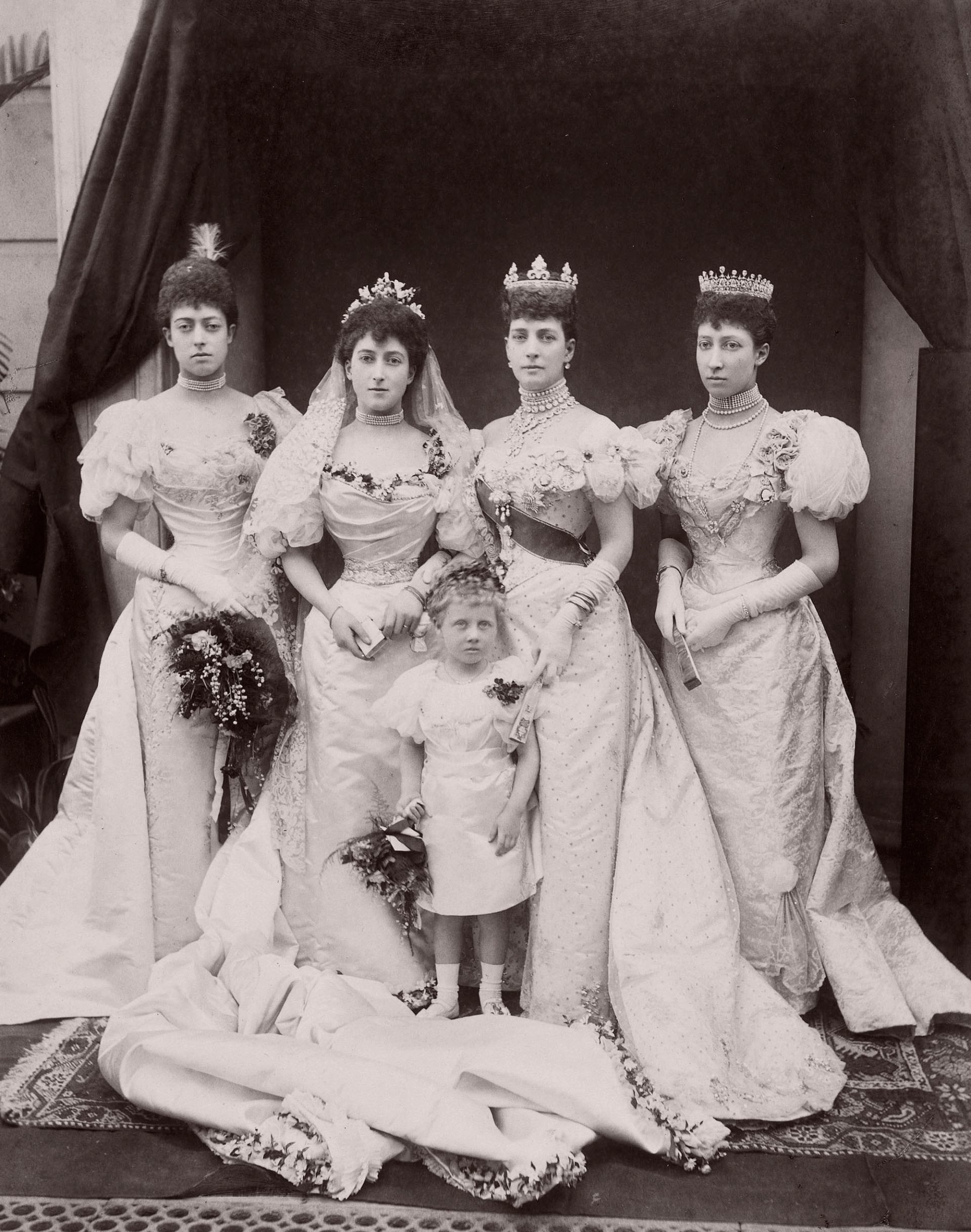
Queen Maud was known for her slender waist – reportedly just 46 cm – which was emphasised by the cut of her wedding dress and by a belt embroidered with silver and diamonds.
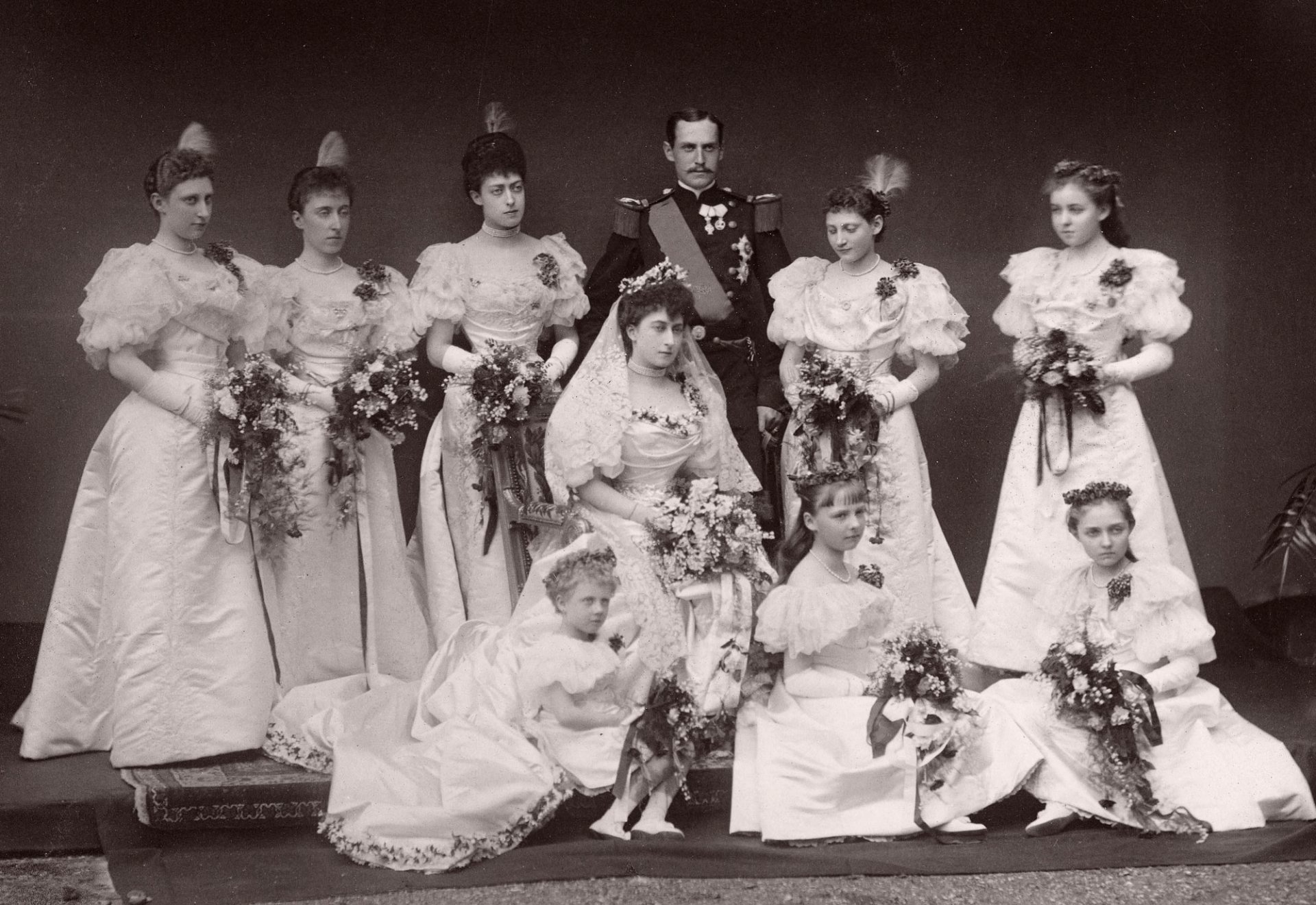
The fabric was ivory-coloured silk satin, and the dress was decorated with garlands of jasmine and orange blossom. She wore her mother’s bridal veil, and on her head she wore a wreath of yellow flowers.
The guests were seated according to rank and dressed according to their assigned places. Ladies invited to the chapel wore full evening dress without trains or veils, while the majority, who had been allocated places on the terrace, were expected to attend in visiting dress with hats.
The Ceremony
The royal guests entered in three processions, while the Grenadier Guards’ band played Wagner’s Festmarsch. Prince Carl wore the Navy’s full-dress uniform and was accompanied by his two brothers, Christian and Harald. Last came the bride on her father’s arm, followed by the Duke of York and eight bridesmaids. The choir sang Oh Paradise, and the ceremony could begin.
The Archbishop of Canterbury officiated. The theme of the wedding sermon was the relationship between Denmark and Great Britain, as it had developed and been strengthened through royal marriages over two generations, first that of Crown Princess Alexandra and Crown Prince Edward – and now that of Prince Carl and Princess Maud.
Queen Victoria was the only person to remain seated throughout the entire ceremony, and when it was over, the newlyweds made a deep curtsey and received congratulatory kisses from the Queen. The organ struck up, and the wedding procession left the chapel to Mendelssohn’s Wedding March.
The Reception
Following the ceremony, lunch was served at Buckingham Palace, followed by a reception at Marlborough House after a drive through the festively decorated streets.
The wedding celebrations concluded with the couple’s departure for Appleton House at Sandringham. The newlyweds had been given the estate as a wedding present by Princess Maud’s parents. Appleton became their home in England, and it was here that their son Alexander, the future Crown Prince Olav, was born on 2 July 1903.