The Family Dining Room
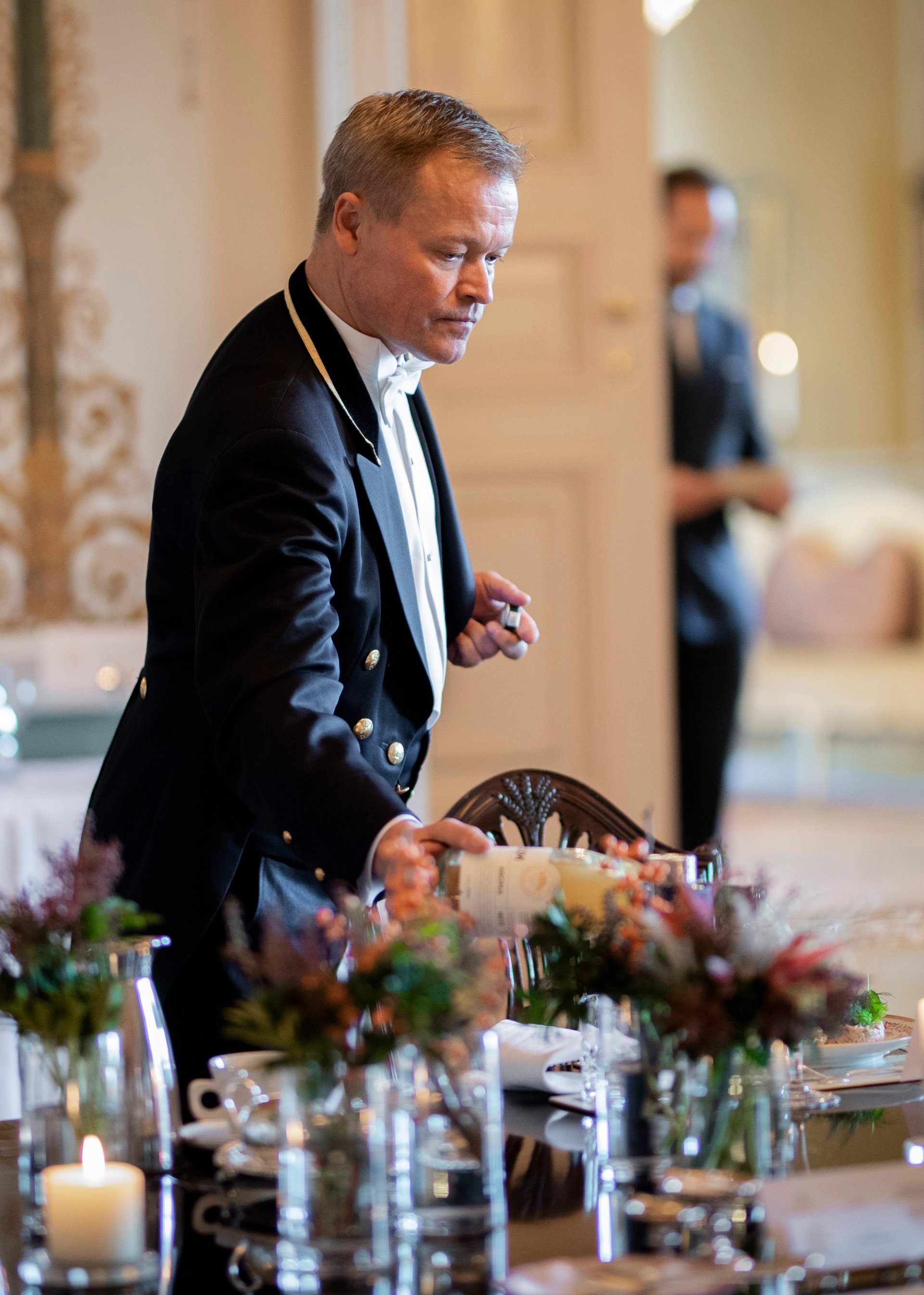
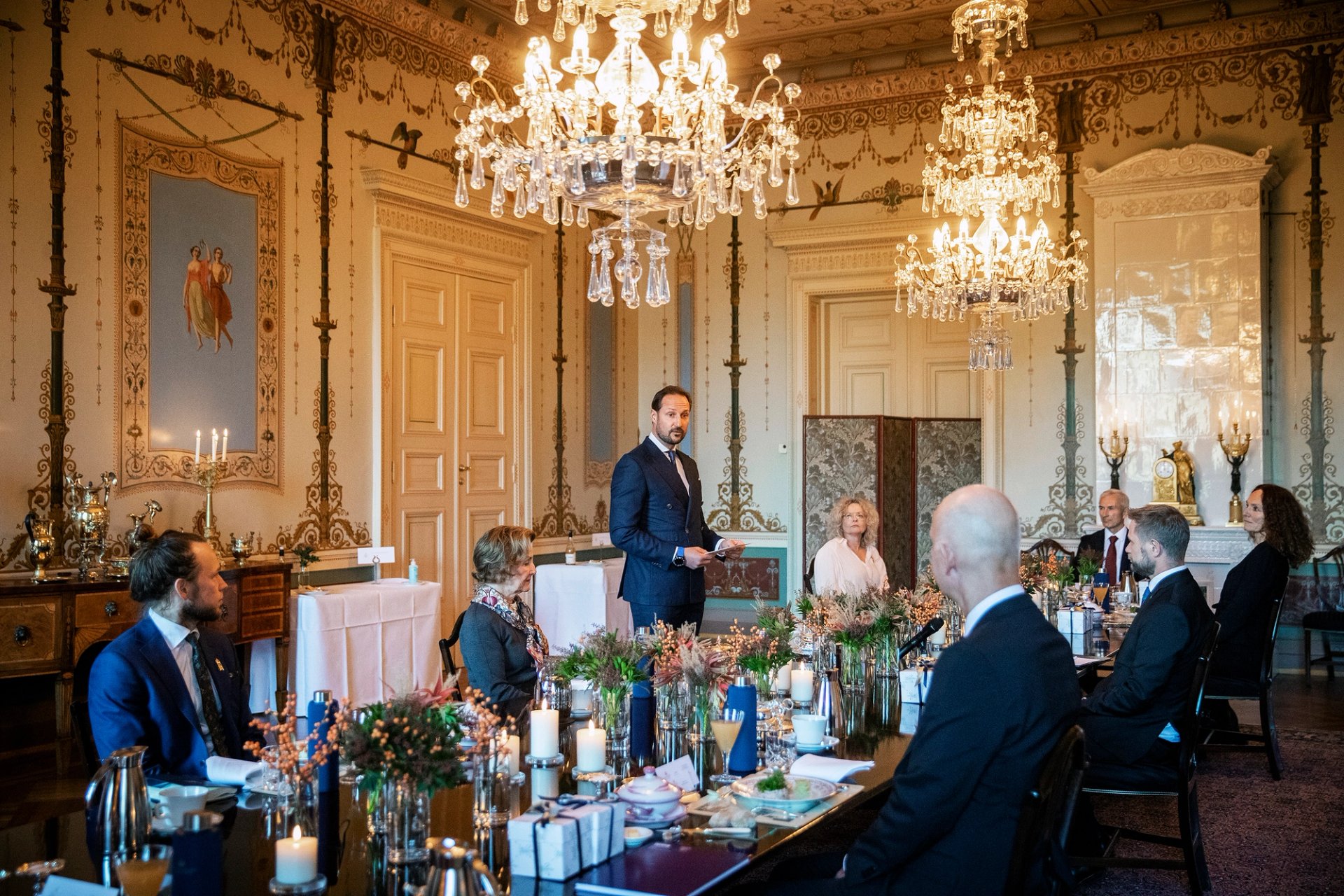
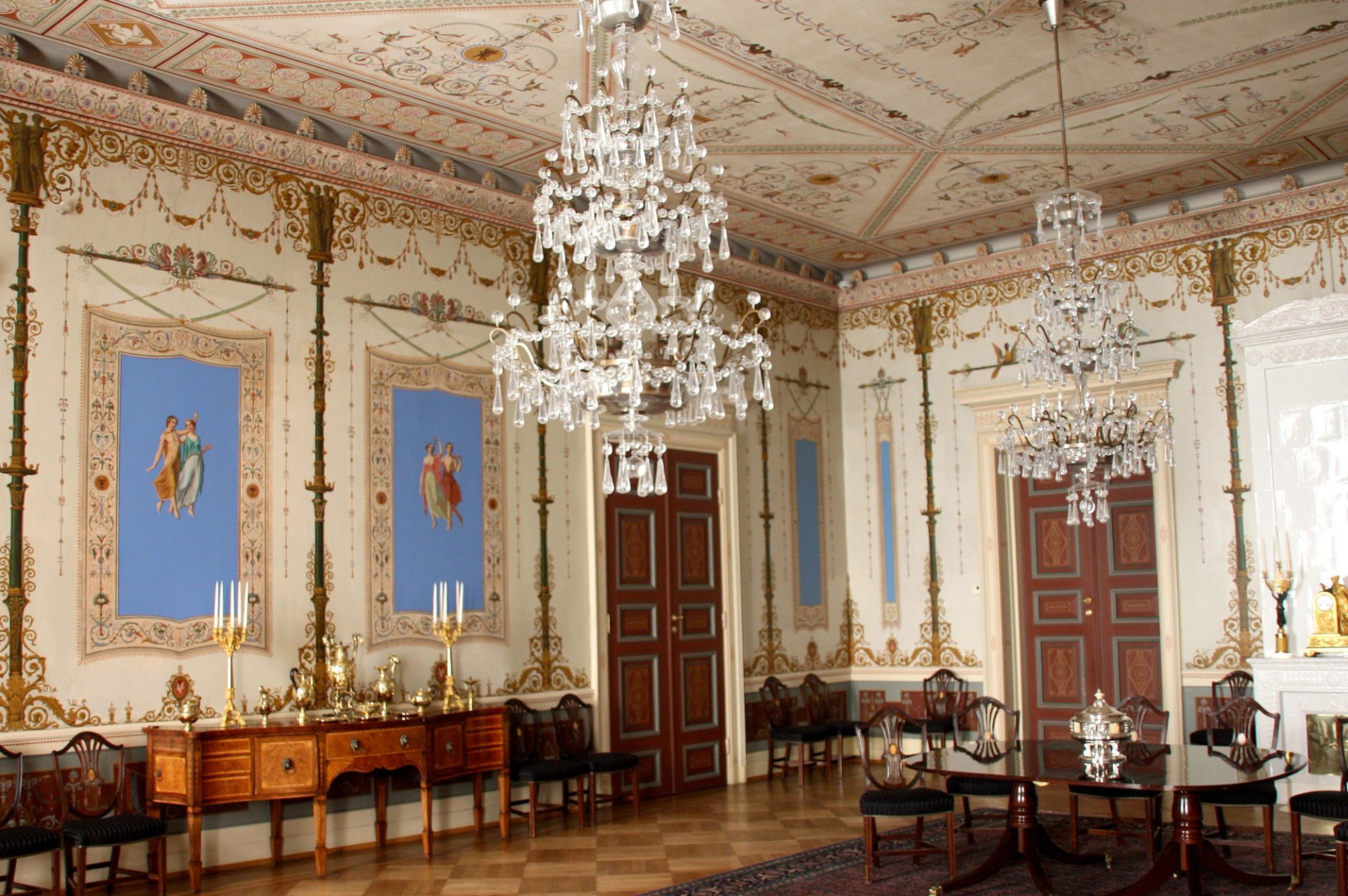
The Family Dining Room is used for smaller official dinners and lunches, such as the annual dinners for the Supreme Court and Norway's bishops. New ambassadors are invited to lunch in this room.
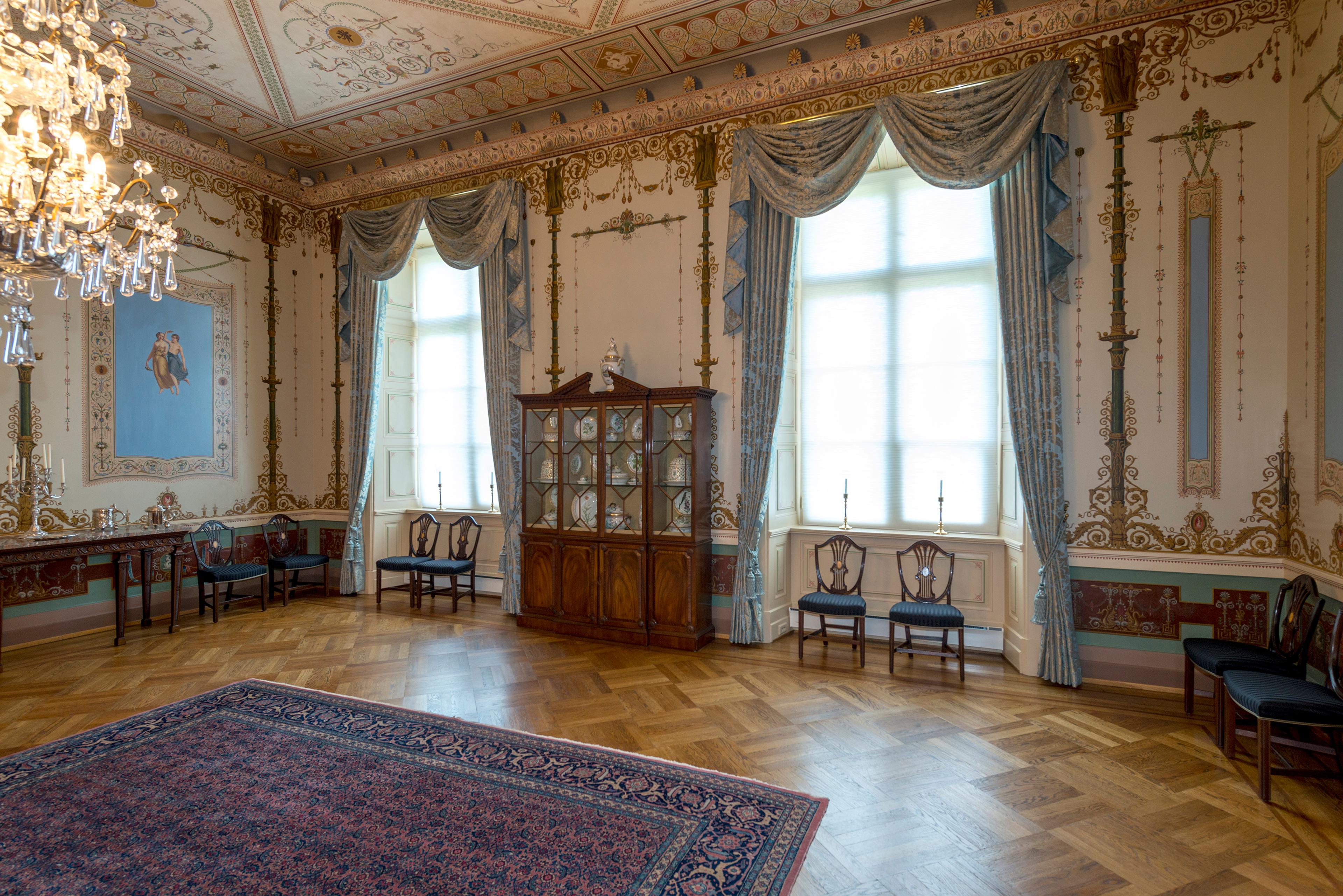
The name “Family Dining Room” is misleading today, but in the past the room was in daily use. King Olav V used to have lunch here with his staff, and before that the room served as the family’s everyday dining room.
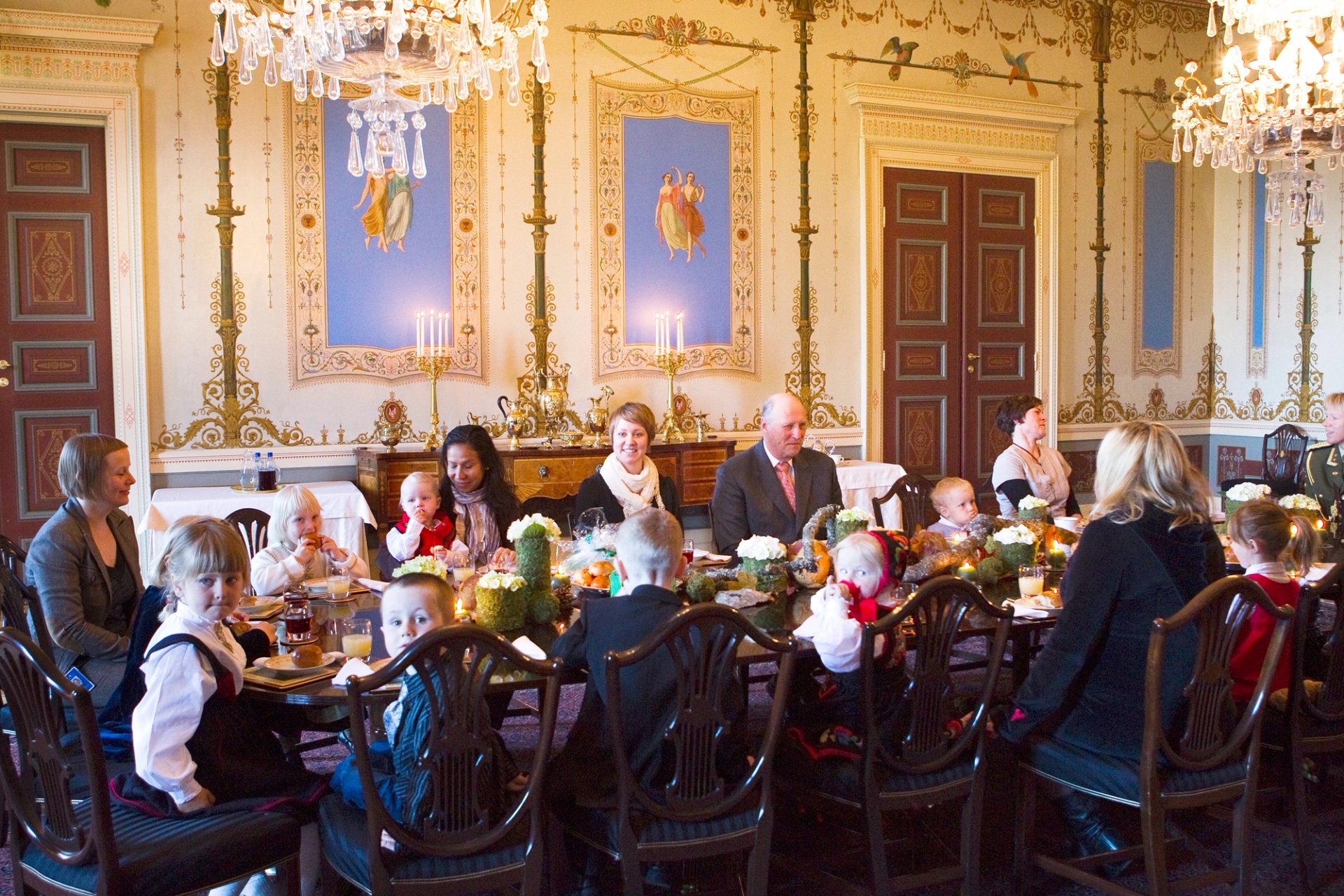
Today it is set for lunch or dinner for up to thirty guests.
Decoration
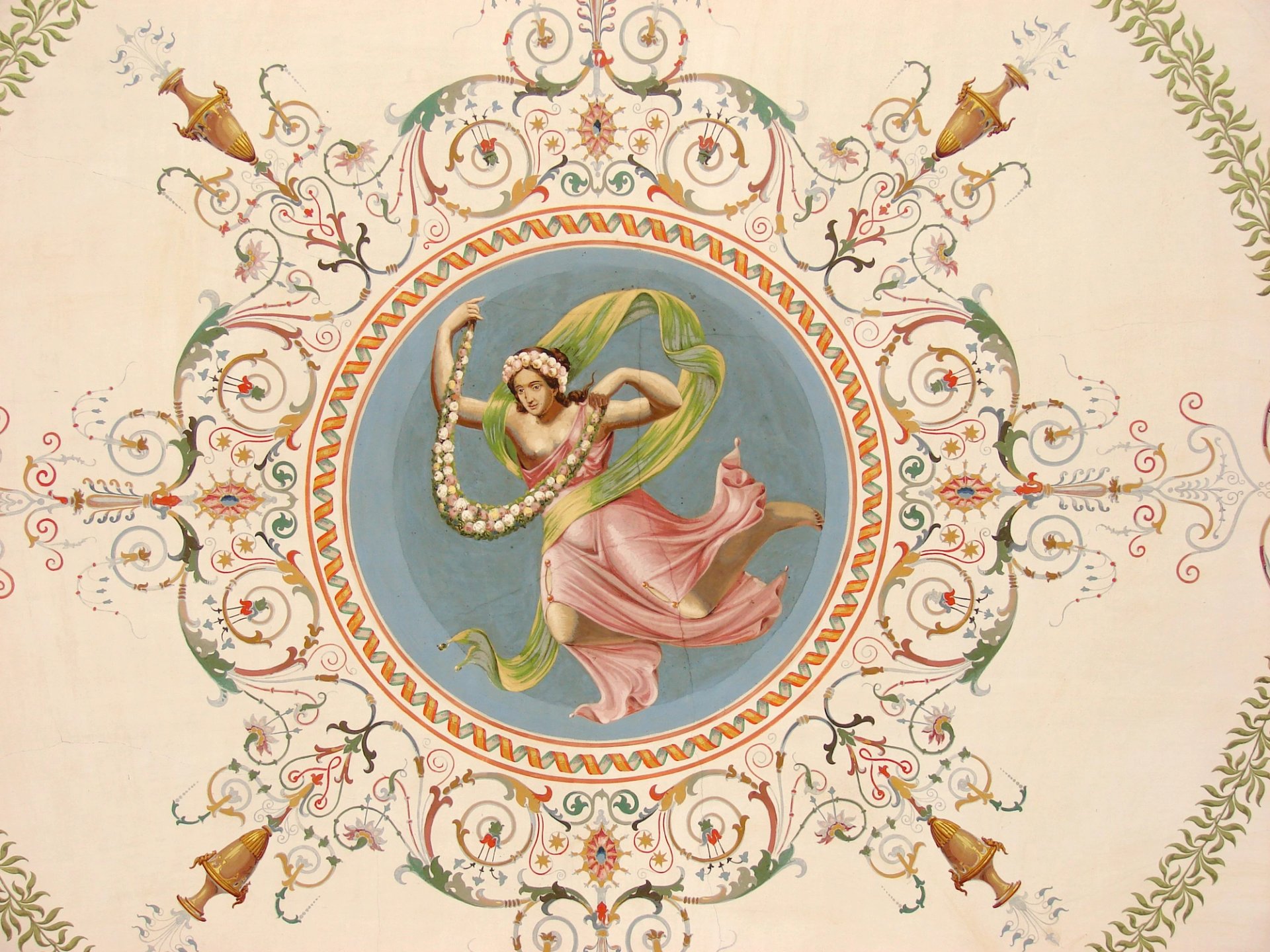
Palace Architect Linstow wanted the dining room to have a calm yet festive interior and décor. He chose to have the walls painted in the Pompeian style. This was very fashionable at the time, while the costs remained relatively low.

On Pompeian style
Pompeian style
At the time when Linstow was planning the decoration of the Family Dining Room, frescos inspired by the finds at Pompeii and Herculaneum were the height of fashion in Europe. The Danish king’s official dining room in Christiansborg Palace and the Tsar family’s private dining room in the Winter Palace were decorated in this style. Arcitect Linstow wrote:
“The Pompeian style, which imitates the patterns found in the excavated ruins of Pompeii, Herculaneum and Stabiæ, gives a splendid impression at the lowest possible cost, since the distemper can be applied directly to a smooth wall.”
The walls and ceiling of the Family Dining Room were painted by Peder Wergmann in 1841. He and his helpers spent seven months decorating the room, including three months devoted to the ceiling. The men and women depicted in the blue panels were painted by August Thomsen.
Wergmann and Thomsen also decorated the wass in the Great Dining Hall.
The Family Dining Room is largely furnished with pieces of furniture and chandeliers that King Olav V received from Norwegian associations and friends for his 60th birthday in 1963.
The chandeliers were designed by Jonas Hidle and made at Hadeland Glassworks. Hidle placed particular emphasis on ensuring that the chandeliers reflected the light decorative elements on the walls. The chandeliers’ teardrop-shaped chains echo the form of the painted garlands in the frieze just below the ceiling.
On display in the Family Diningroom: Flora Danica
Flora Danica
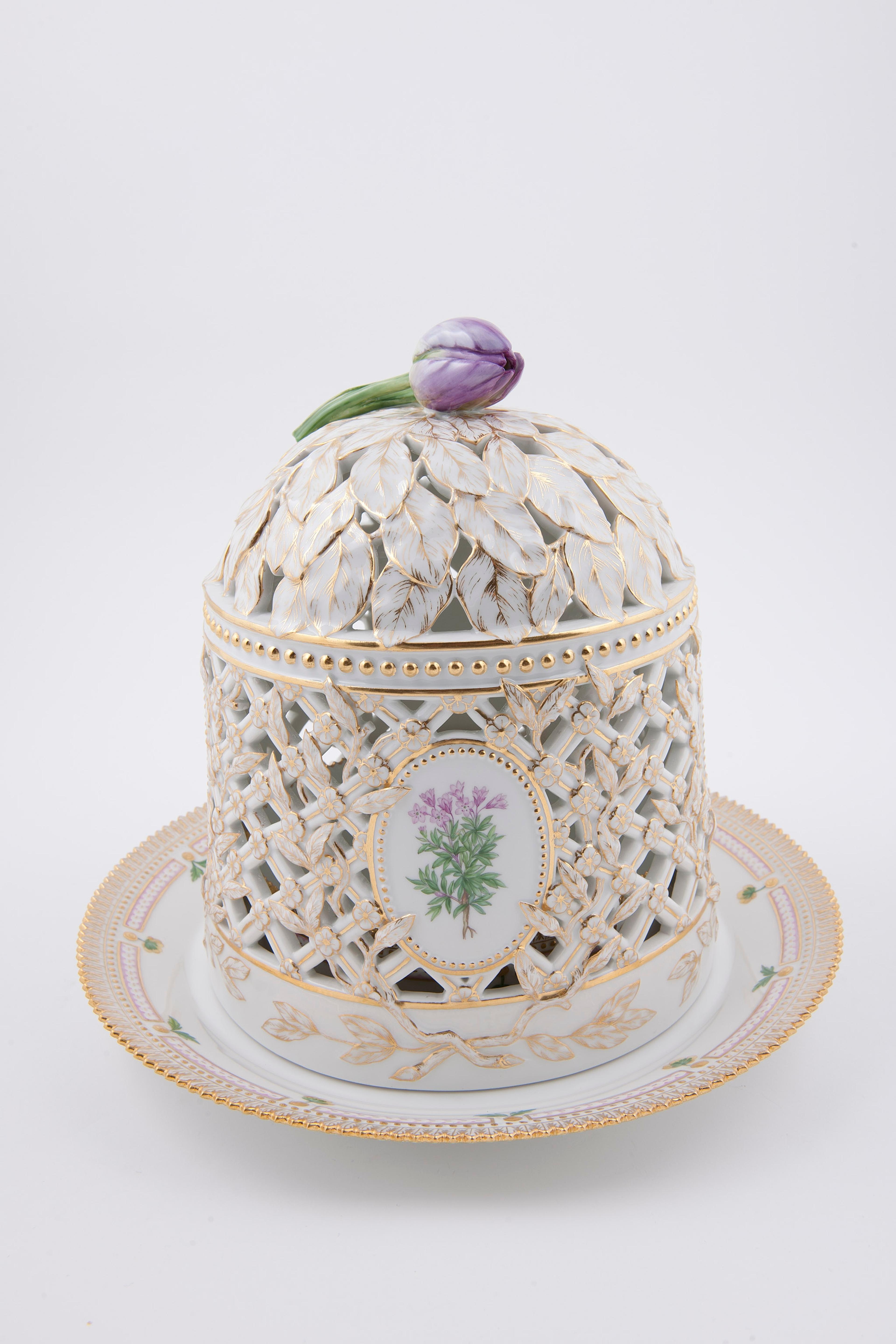
Parts of the Palace’s collection of Flora Danica porcelain are on display in the Family Dining Room. The service takes its name and decoration from the botanical work Flora Danica. The work was begun in 1761 and consists of 3,240 hand-coloured illustrations of all the Scandinavian and northern German plants known at the time.
The first pieces of the service were produced in the 1780s, and the complete service, comprising all 1,802 pieces, was finished in 1803. It is said that King Christian VII of Denmark wished to give the service as a gift to Empress Catherine of Russia, although whether this is true is not known.
Two plates from the very first service produced are displayed in the glass cabinet in the Family Dining Room. The Palace’s collection has been supplemented over the years through inheritances and gifts.
The chairs are in the Hepplewhite style, based on an original chair that forms part of the furnishings. Master carpenter Lørup made the chairs in Oslo. He also made the dining table, based on an English design dating from around 1780–90.