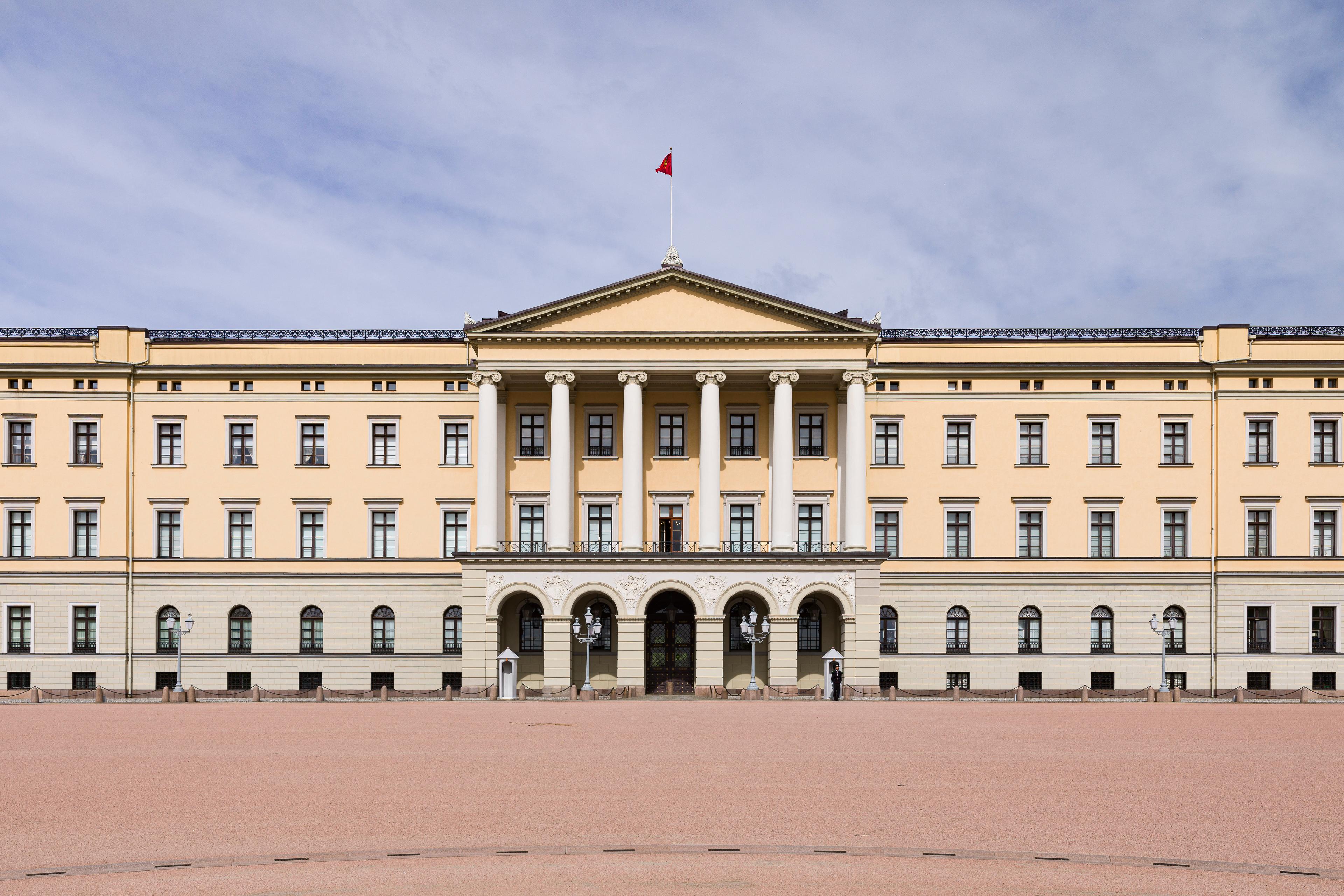
The Council Chamber
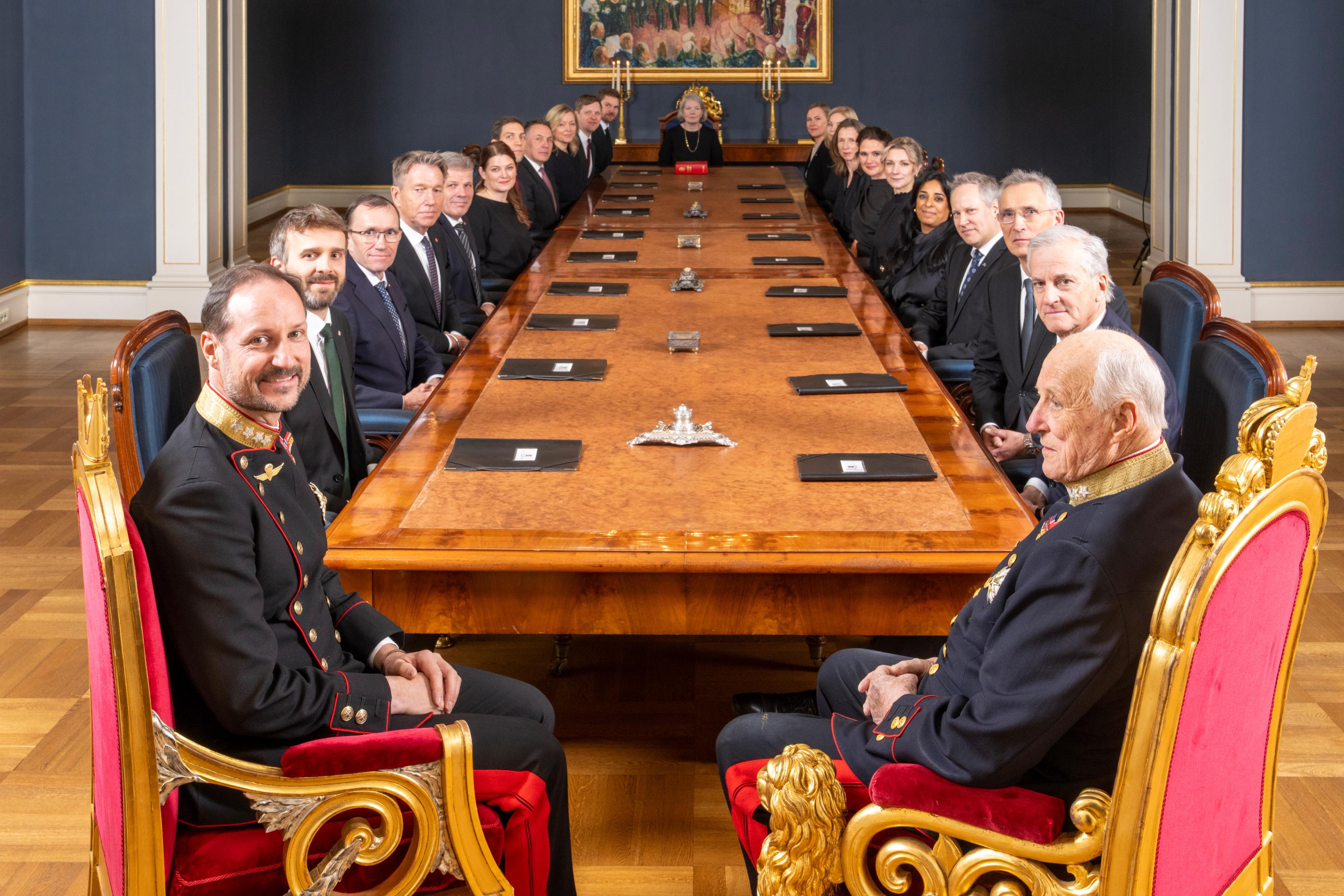
The King presides over the Council of State Fridays at 11.00 hours. The members of the Government gather in the Ministers’ Lounge before entering the Council Chamber, where they take their places around the King’s table.
At 11:00 a.m., His Majesty The King arrives, usually accompanied by His Royal Highness The Crown Prince, who takes his place at His Majesty’s side.
During the meeting, the Prime Minister is seated on the King’s right. The other ministers are arranged according to rank around the King’s table. Directly opposite the King sits the Secretary to the Government, with the Laws of Norway.
All laws and other decisions made in the Council of State must be sanctioned by the King and countersigned by the Prime Minister (or his/her deputy) in order to be valid.
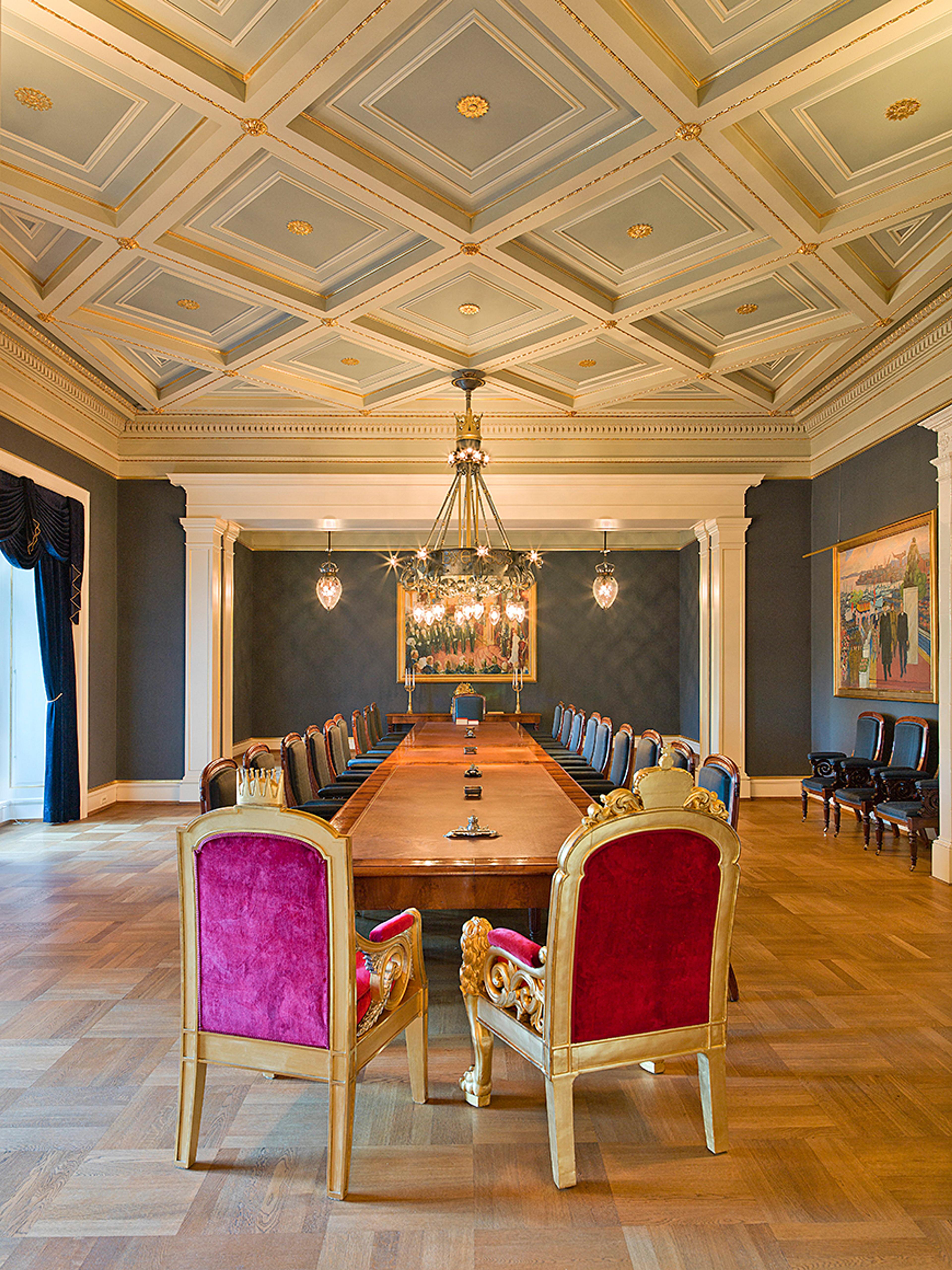
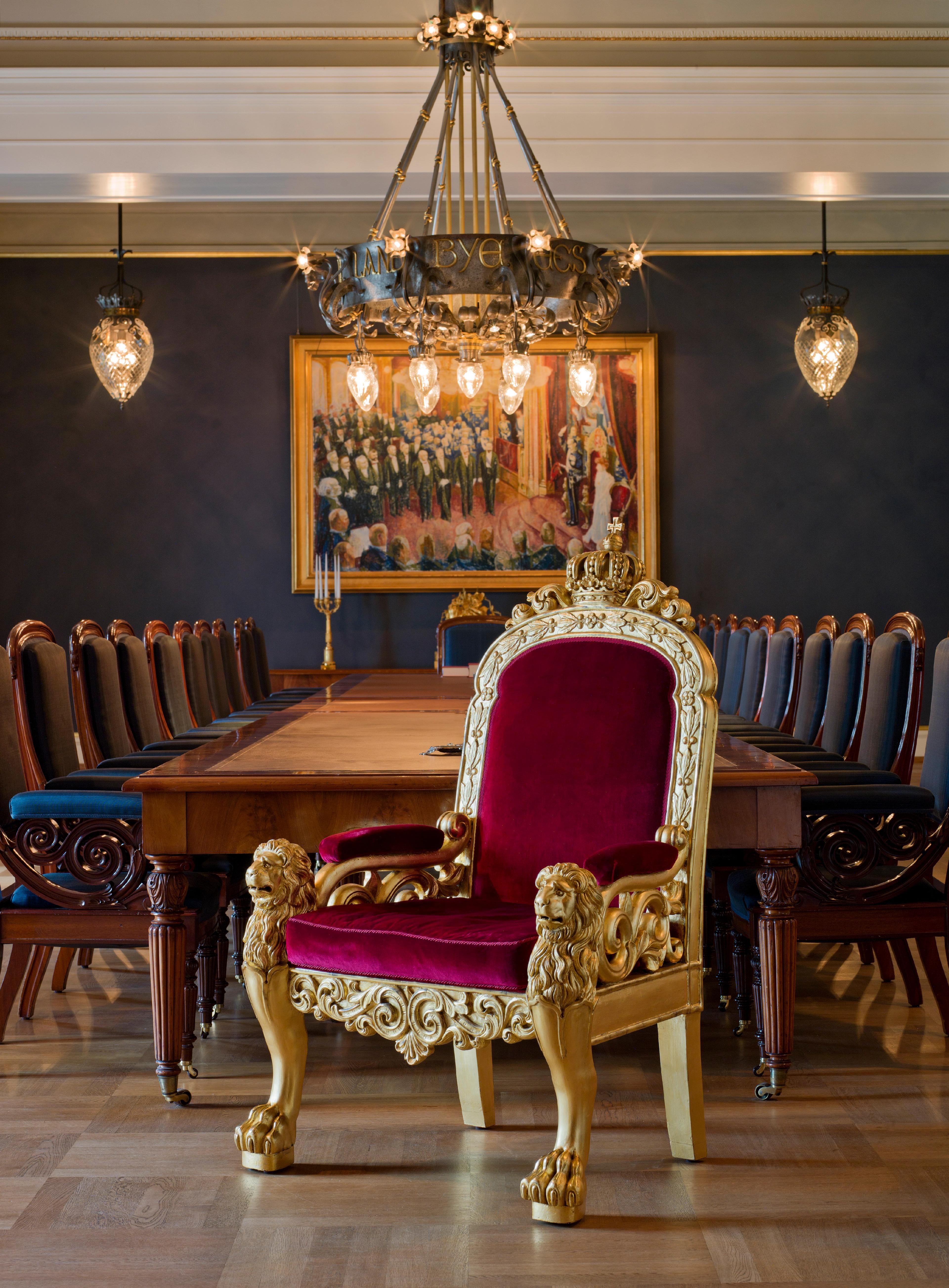
Above the large table hangs a wrought-iron chandelier in Art Nouveau style from 1901, designed by architect Jørgen Berner. It bears the inscription “By law shall the land be built” in gilded letters. The quotation is taken from the Frostating Law, as it was written down around 1260. The chandelier was installed in 1901, when the Palace was fitted with electric lighting.
The throne and the other chairs in the Council Chamber
The Chairs in the Council Chamber
His Majesty The King’s throne dates from 1846. It was designed by Palace Architect Linstow for use in the Council Chamber. The chair is decorated with acanthus leaves, features sturdy lion’s feet, and has armrests terminating in lion heads. The backrest is topped with a closed royal crown.
The Crown Prince’s chair dates from 1997 and was designed by Thomas Thiis-Evensen. It is also gilded and upholstered in deep red, but is simpler in design than the throne. The backrest is adorned with an open crown – a hereditary princely crown.
The ministers’ chairs were made for the original Council Chamber in 1880. They have been restored over time, and as the number of ministers has increased, new chairs have been added. These new chairs are exact replicas of the originals from 1880.

History
Originally, the Council Chamber was located in the official part of the royal apartments, in what is now the King’s office. In 1907, it was moved to its current location. The architect brothers Carl and Jørgen Berner were tasked with adapting the original guardroom to its new function as a Council Chamber.
Extensions
In the 1990s, the government had more ministers than the Council Chamber could accommodate, making an expansion necessary. The Council Chamber was merged with the adjoining room.
It is not difficult to see that the Council Chamber used to be two rooms. Firstly, part of the wall between the two rooms still stands, as it is a load-bearing wall. Secondly, the ceiling decorations differ: the coffered ceiling designed by Palace Architect Linstow in the original section, and the ceiling with star motifs executed under architect Arnstein Arneberg in the 1950s in the other.
As the number of ministers increased, the table was also extended. The oldest part is closest to the King’s throne. This section of the table is equipped with drawers that the ministers originally used to store papers and writing materials.
During the coronavirus pandemic in 2020–2021, the Palace’s joiners extended the table further so that the requirement of at least one metre between each minister could be observed.
Art in the Council Chamber
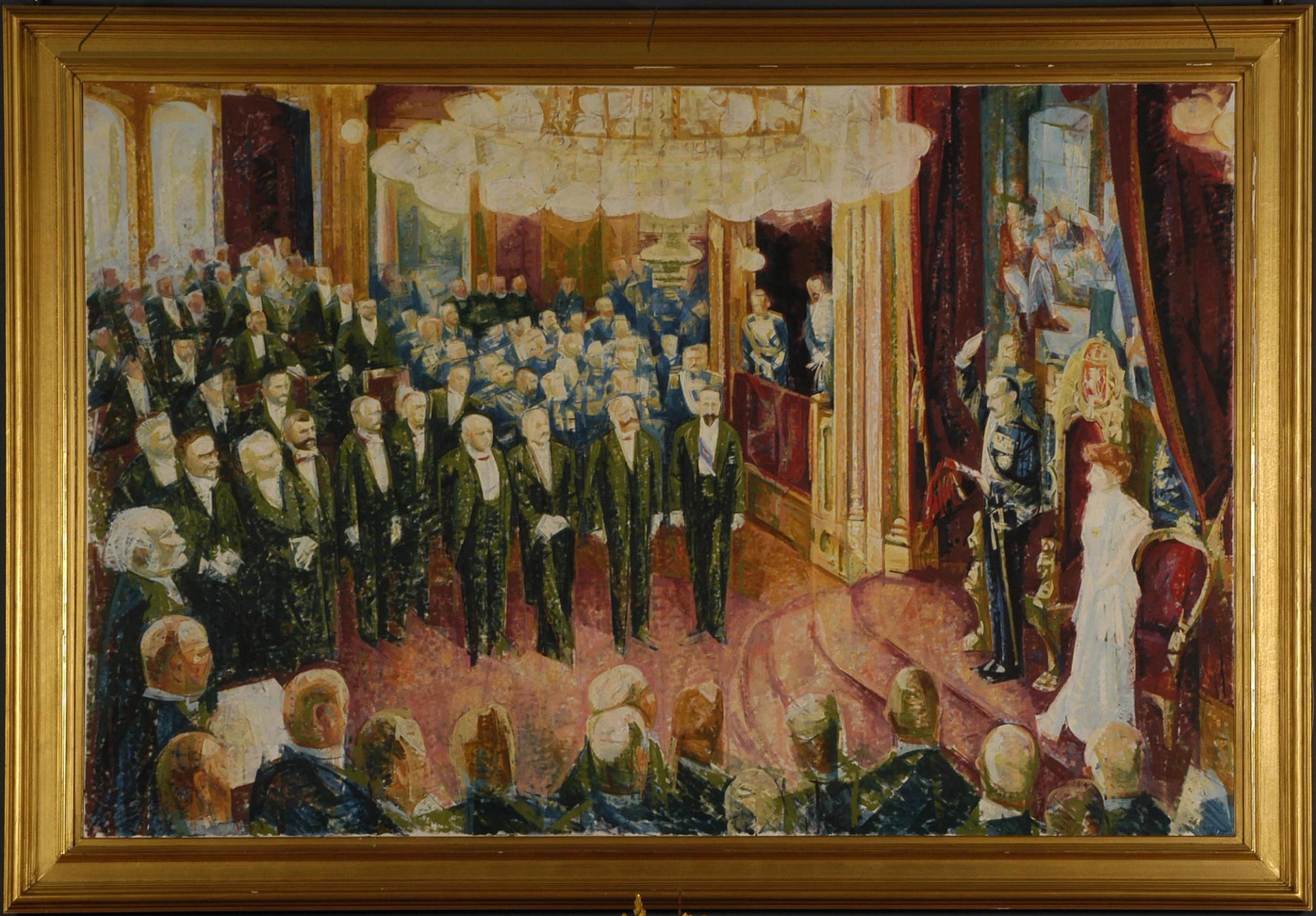
Artistic Decoration
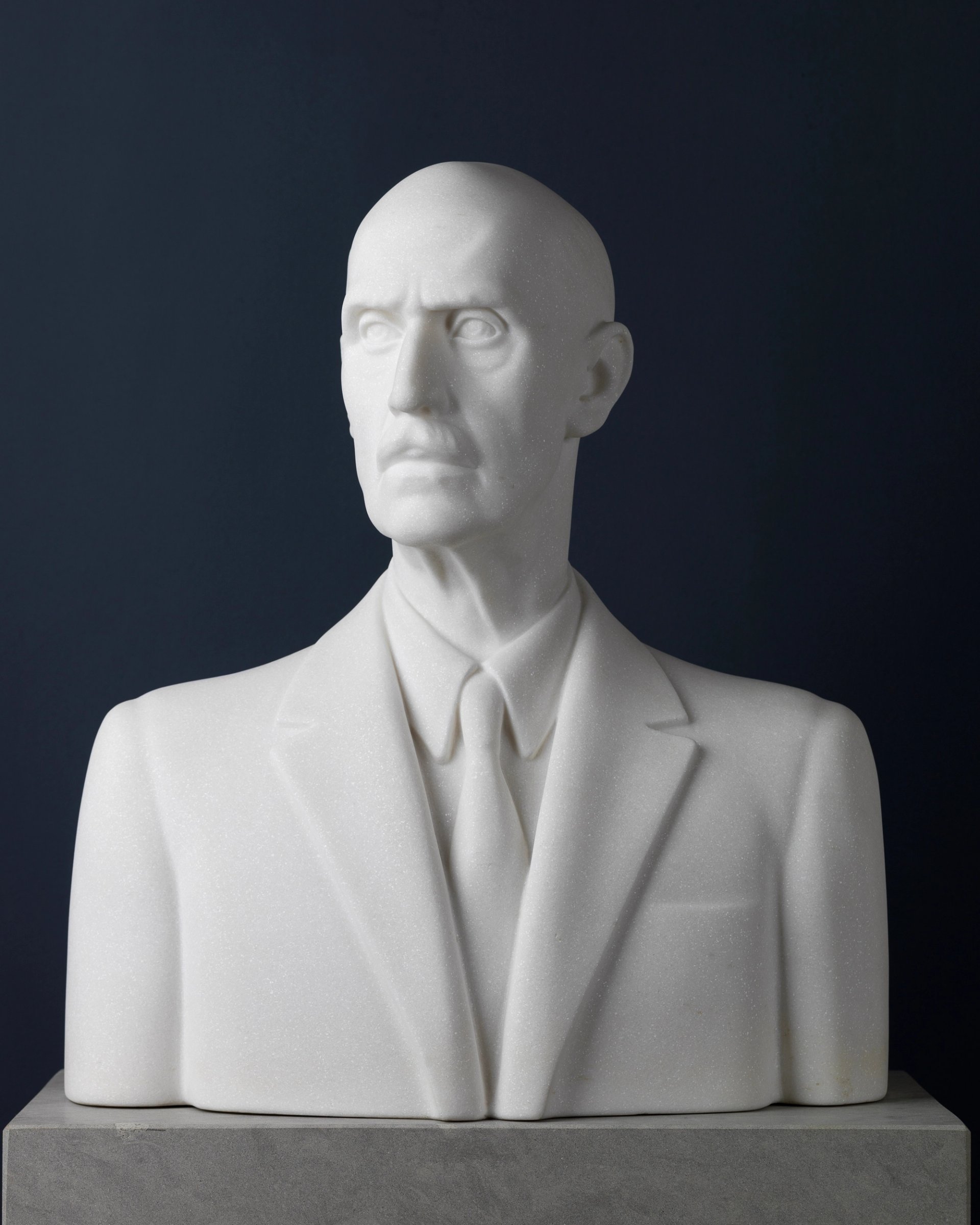
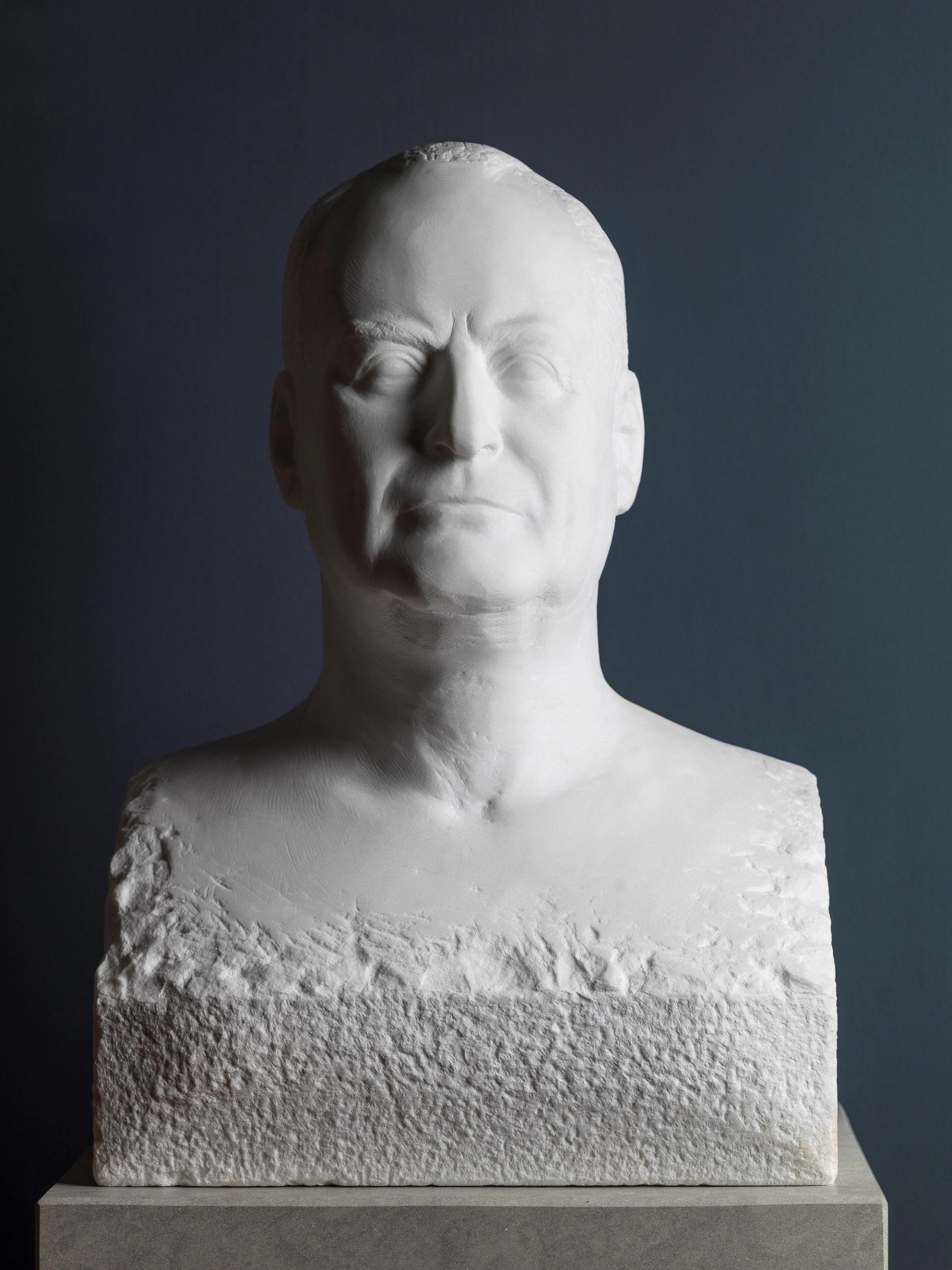
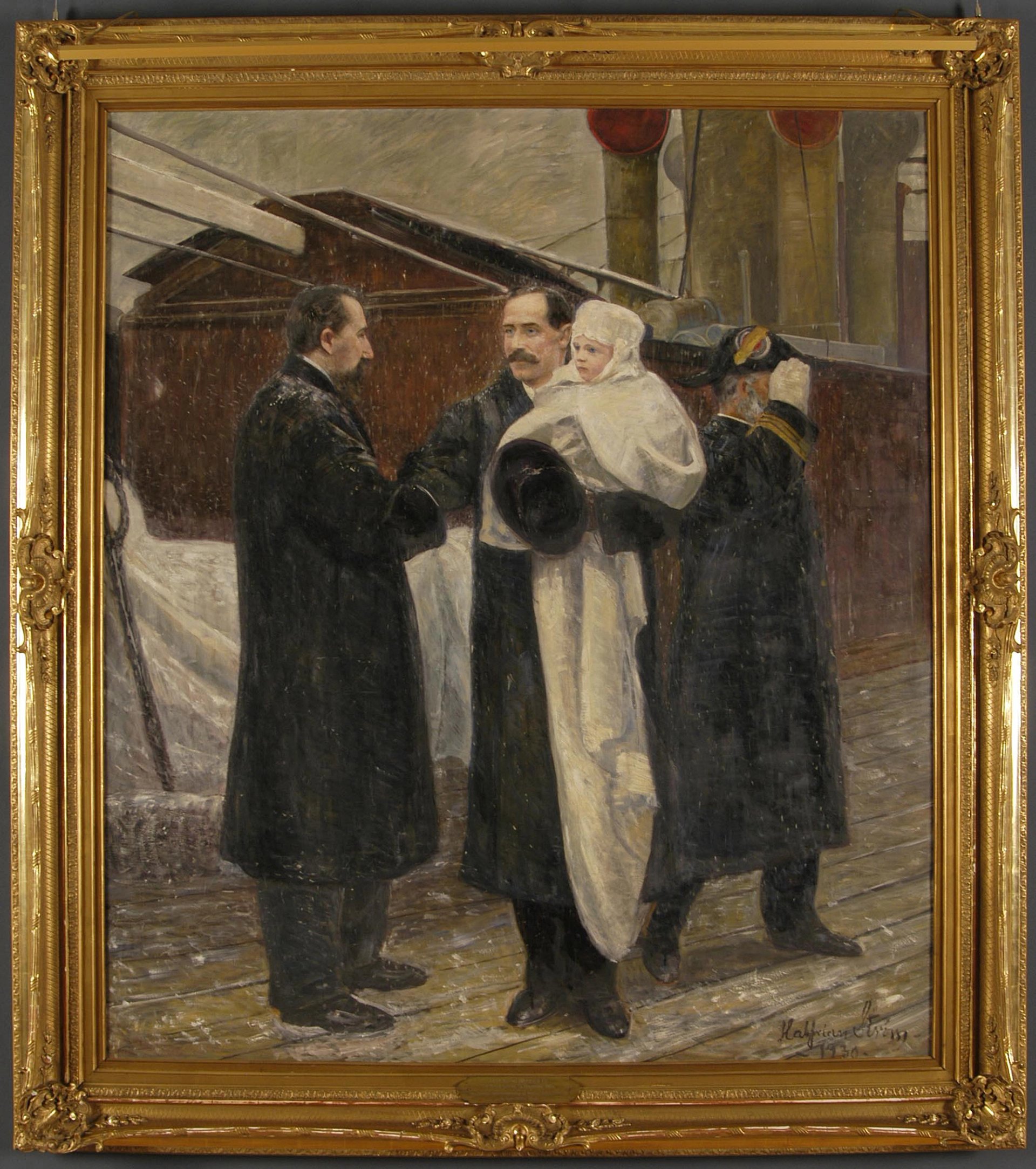
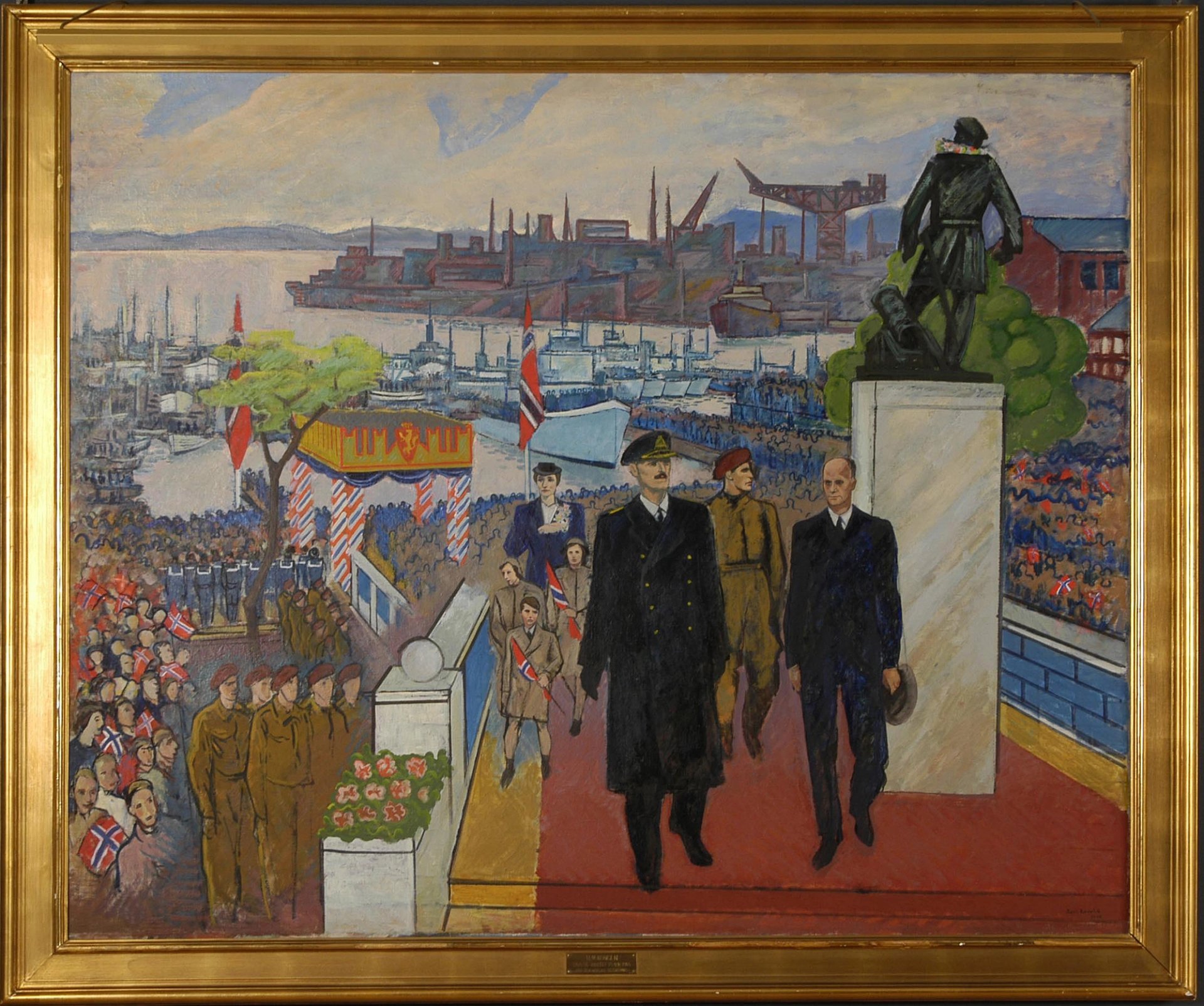
The paintings in the Council Chamber commemorate important events in the monarchy following the dissolution of the union with Sweden in 1905: King Haakon’s arrival in the country in 1905, King Haakon’s oath before the Storting in 1905, and the Royal Family’s return after the Second World War on 7 June 1945.
On either side of the door behind the throne are busts of King Haakon VII and King Olav V. Thus, when King Harald V holds a Council of State, he is flanked by portraits of his father and grandfather.