The Vestibule
For those arriving as official guests, the Vestibule is their first encounter with the Royal Palace. For the Palace’s architect, the first impression was of great importance: the Vestibule had to impress.
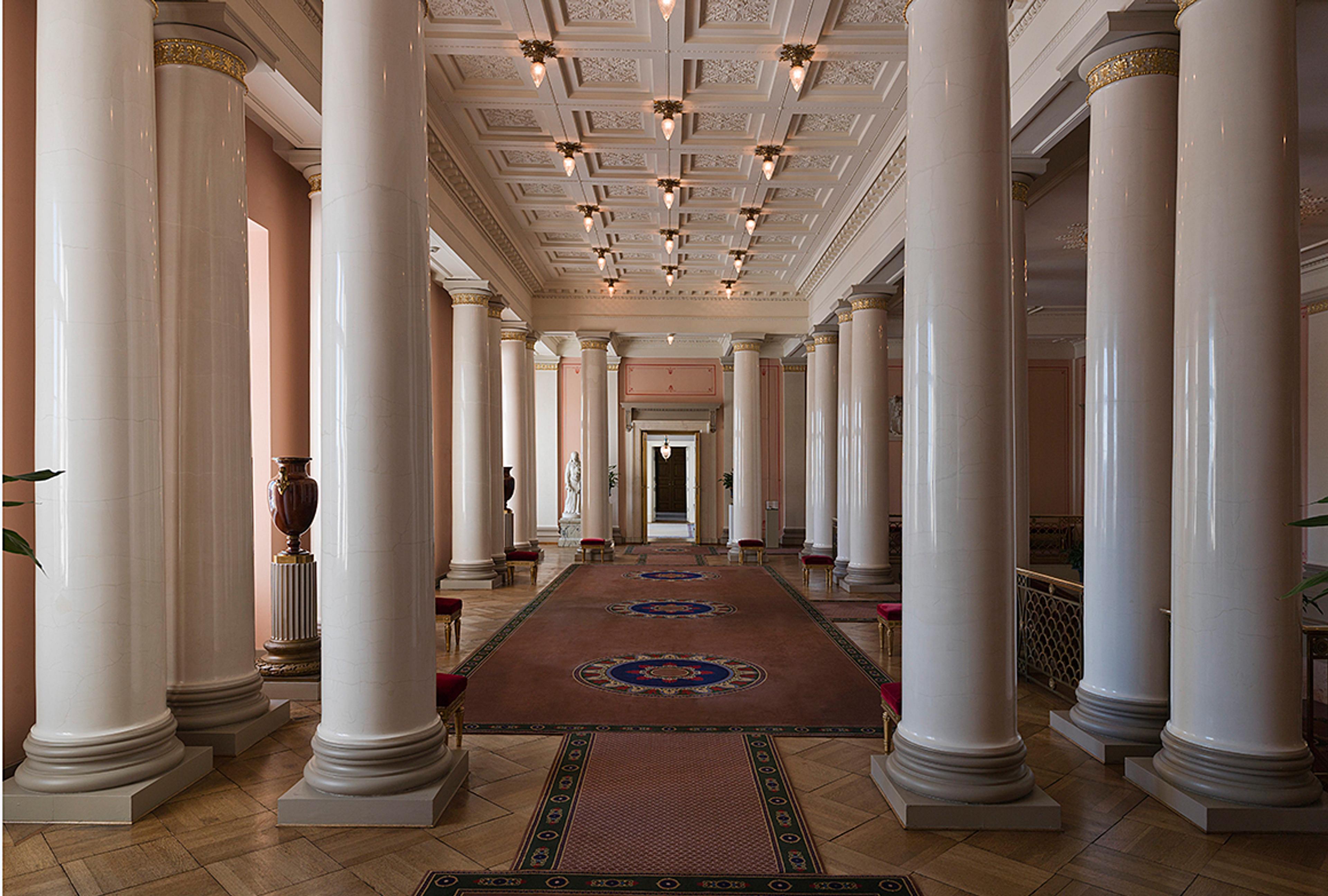
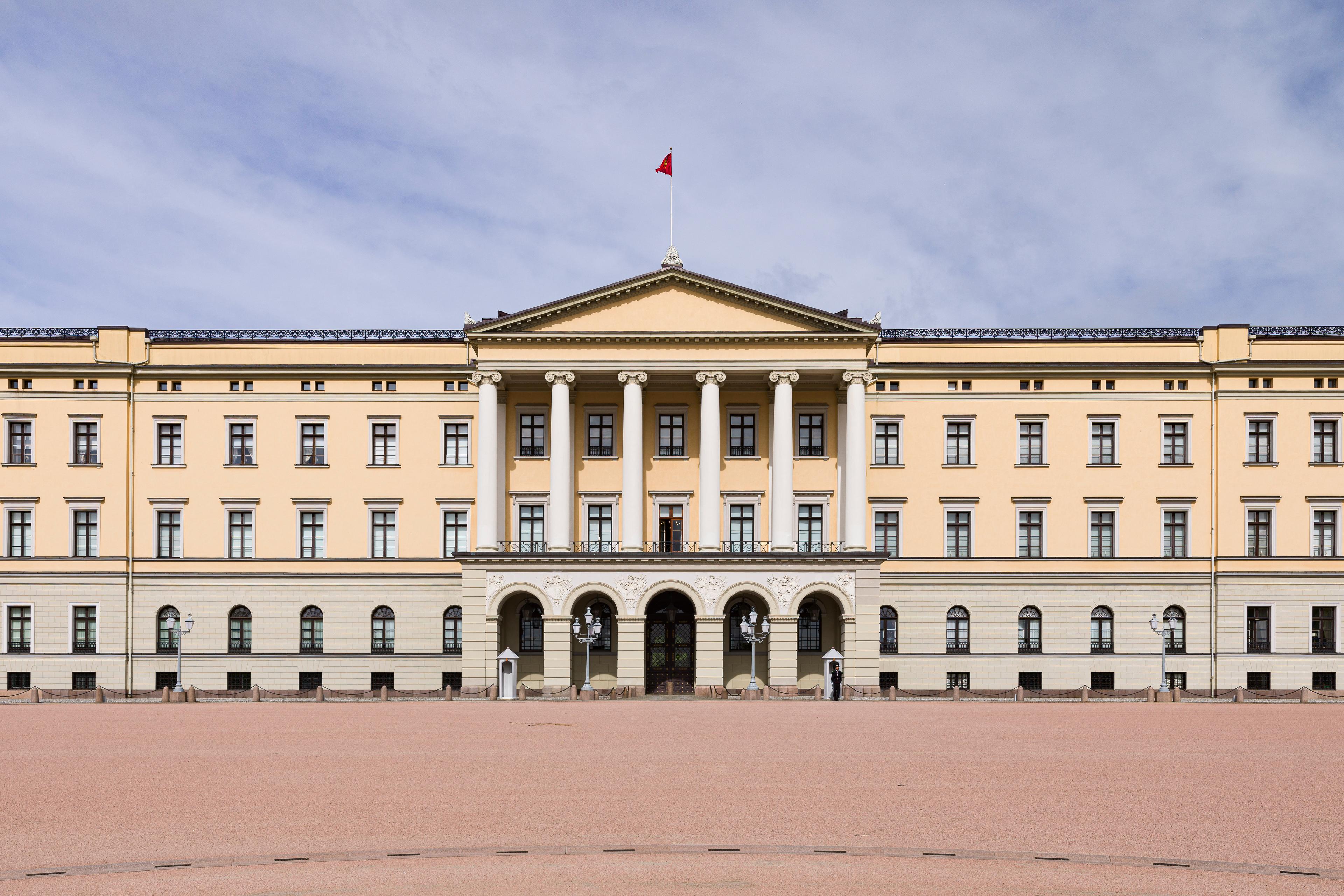
The Vestibule spans two storeys and is situated directly behind the central section of the Palace façade. From the Upper Vestibule, one can step out onto the Palace Balcony, which overlooks Oslo’s main thoroughfare, Karl Johan, and the Storting (Parliament). The placing of the Vestibule and the main staircase in the centre of the Palace determined the city planning of Oslo.
When the Palace was built, it stood some distance outside what is now central Oslo. Karl Johan street was constructed in the 1830s to link the royal residence with the city. It is one of Oslo’s principal axes and the promenade in Norway built on a European scale. The axis was laid out with the central section of the Palace as its focal point.
In the Upper Vestibule, guests are received by the Lord Chamberlain on the occasion of gala dinners and receptions. On certain ceremonial occasions, soldiers from His Majesty The King’s Guard line up here.
The Vestibule is likewise the place where guests arriving for an audience are shown further — either to the right, through the Bird Room to the King’s office, or to the left, where the Crown Prince has his office.

Design and Decoration
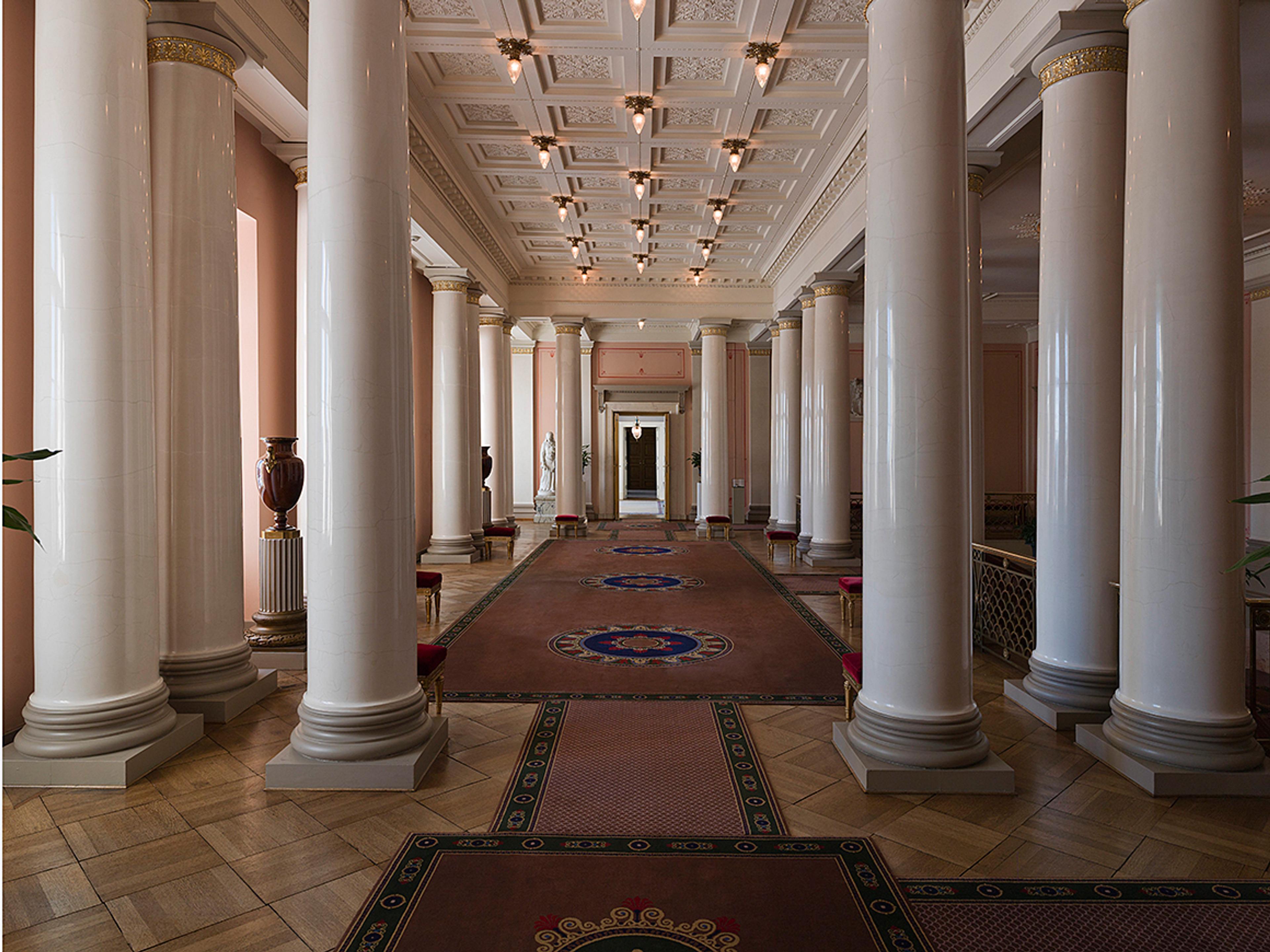
Twenty stucco marble columns dominate the Upper Vestibule. It was originally intended that the columns should be carved from white Bergen marble. The Storting allocated funds for this in 1836, and quarrying began. However, during one of his trips abroad, Architect Linstow became convinced that stucco marble would be a more suitable material, as it allowed greater freedom in the choice of colour.
The walls are painted according to Linstow’s original plan, in a pink distemper with vermilion red line decoration featuring palmettes, while the columns are a creamy white.
Stucco marble
Stucco marble
Stucco marble is a mixture of water, diluted bone glue, gypsum, crushed dolomite and pigment.
The components are mixed manually and applied to a well moistened base. When the mass has hardened it has to be laboriously sanded down with pumice stone, preferably six to eight times, in order to achieve a high gloss.
Since the vestibule columns are load-bearing, their centre consists of a wooden post covered with reed mats to which stucco has been applied.
Decoration
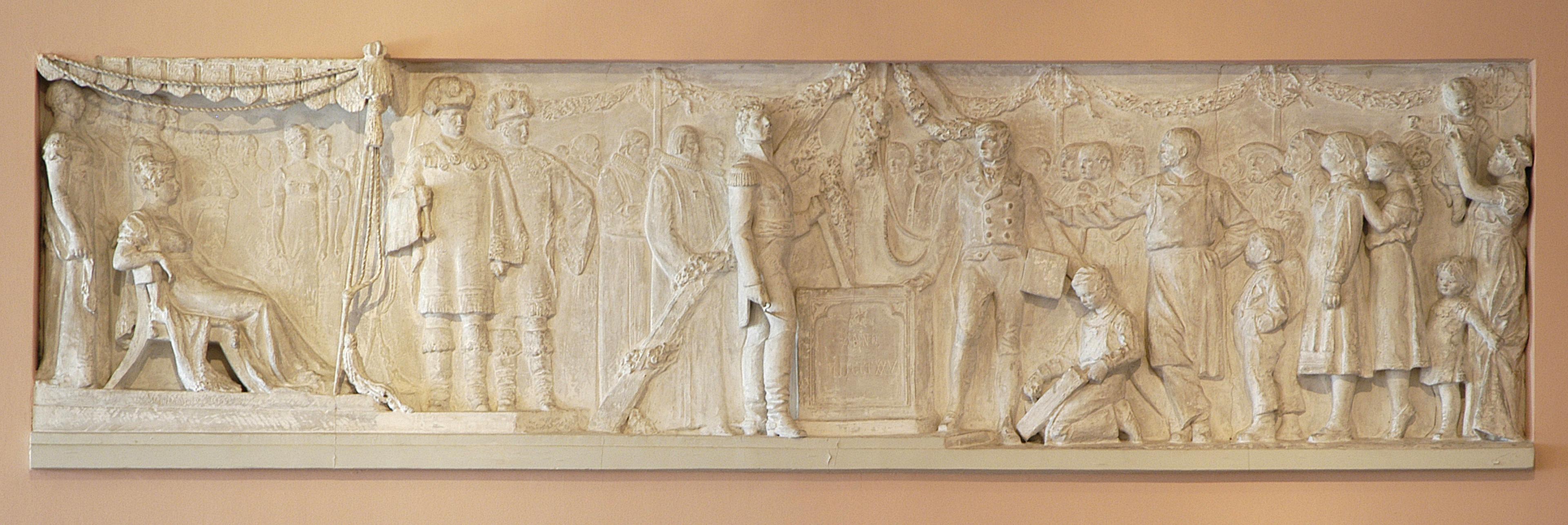
The artistic decorations consist of a number of sculptures and two plaster reliefs, the latter depicting important events connected with the building of the Palace.
There is also a small display case containing the trowel used by King Carl Johan when he laid the Palace’s foundation stone in 1825.